Enjoy Reading

Enjoy Reading
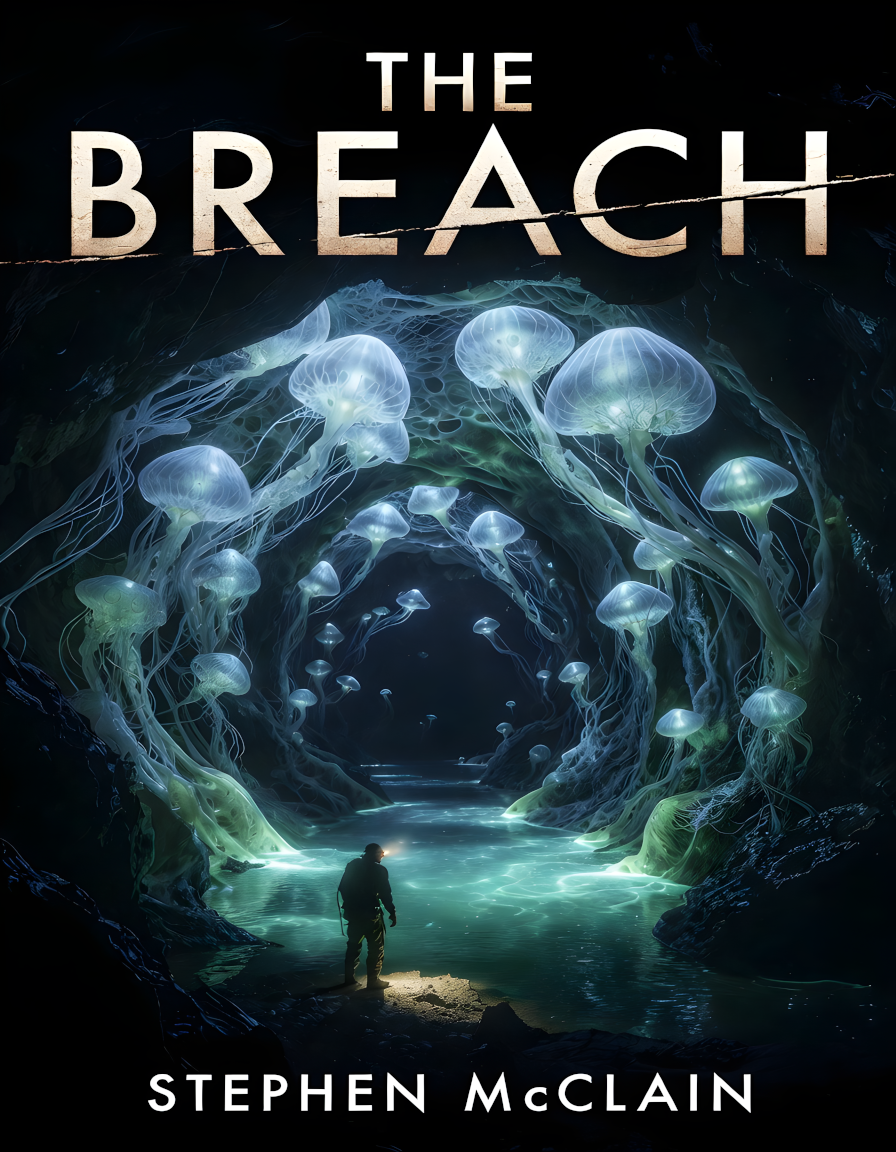
When a rogue astrobiologist breaks into Romania’s forbidden Movile Cave to prove extremophile life could seed other planets, she discovers the cave’s 5.5-million-year isolation wasn’t an accident—and the creatures inside are preparing to leave.
THE BREACH
by Stephen McClain
PROLOGUE
JULY 1986 • MANGALIA REGION, ROMANIA
The drill bit screamed through limestone like a demon being born, its metallic shriek echoing across the excavation site and into the gray Romanian morning. Gheorghe Munteanu had been working the Mangalia dig for three months now—ninety-two days of dust and noise and the bone-deep exhaustion that came from wrestling industrial equipment in service of the Socialist Republic’s endless hunger for resources. The sound of the drill had become a kind of music to him, the percussion of progress, the rhythm of quotas being met and commissars being satisfied.
But today, something was different.
The drill shuddered in his calloused hands, the vibration traveling up his forearms and into his shoulders where it settled like a cold stone pressing against his spine. In thirty years of working underground—in mines and excavation sites from the Carpathians to the Black Sea coast—Gheorghe had developed an instinct for wrongness. The earth spoke to those who listened, and right now it was screaming.
“Slower,” he called to young Vasile Popescu at the generator controls, his voice barely audible over the machinery’s roar. “Something’s not right here.”
The younger man couldn’t hear him, or pretended not to. Vasile was twenty-three, eager to prove himself, burning with the kind of ideological fervor that the Party cultivated in its youth. Production quotas were sacred. Delays were suspicious. And Comrade Supervisor Dumitru didn’t accept excuses about feelings, about the wrongness that settled in an old worker’s bones after three decades of reading the earth’s subtle moods.
The drill bit through another layer of limestone, and Gheorghe felt the resistance change. Not gradually, the way stone normally yielded to determined machinery, but suddenly—a shift from solid to yielding that made his stomach lurch. He’d felt this before, in a mine collapse near Petroșani that had killed four men. He’d sworn then that he’d never ignore that feeling again.
“Stop!” he shouted, releasing the drill controls. “Vasile, shut it down! Now!”
But the drill had already punched through.
For one eternal moment, there was nothing—just the absence of resistance, the bit spinning freely in empty space where solid rock should be. Gheorghe’s mind had time to register the impossibility: the geological surveys showed solid limestone for another forty meters down. There shouldn’t be any cavity here. There couldn’t be.
Then the ground beneath his feet shifted.
Not cracked. Not shattered. The limestone didn’t behave the way stone should when stressed. Instead, it seemed to dissolve, to dematerialize, to simply cease existing in the way that matter was supposed to exist. The drill rig tilted forward, and Gheorghe was falling, and Vasile’s scream cut through the morning air as the earth opened its mouth and swallowed them whole.
The descent lasted forever and no time at all.
Gheorghe hit water—or what his panicking mind insisted must be water, though it was wrong, all wrong. Too warm, almost body temperature. Too thick, with a viscosity that clung to his clothes and skin like oil. The impact drove the air from his lungs in an explosive gasp, and he tasted it: sulfur and copper and something organic that made his gorge rise.
Above him, the circle of daylight was already shrinking as debris rained down. Chunks of limestone splashed into the liquid around him, and somewhere in the chaos he could hear Vasile screaming, the sound wet and panicked. Gheorghe kicked toward the light, driven by the animal imperative older than thought: reach the surface, breathe, live.
His hand found stone. He pulled himself onto a ledge, gasping and retching, and that’s when he really smelled it.
Not the sulfur—that would have made sense. Hydrogen sulfide from geological processes, methane from decomposing organic matter, any of a dozen noxious but explicable gases. But this smell was different. It was organic but not rotting. Living but not familiar. It reminded him of his grandmother’s root cellar where she’d stored vegetables through the winter, of the earth after a hard spring rain, of the inside of a pregnant mare’s womb that he’d once helped clean after a complicated birth.
It smelled like life, but life that had been waiting in the darkness for longer than anything should wait.
“Vasile!” His voice echoed strangely in the cavity, the sound flattening and multiplying until it seemed like a dozen men were calling the same name, each voice slightly delayed, slightly different in pitch.
No answer.
Gheorghe’s eyes adjusted slowly to the darkness. The light from above was already dimming as dust settled and debris blocked the opening, but there was something else—a faint luminescence, blue-green and pulsing, coming from deeper in the cavity. It was enough to see by, barely. Enough to wish he couldn’t see at all.
The walls moved.
His first thought was that it was water damage, limestone dissolution creating the illusion of movement. His second thought died before it could fully form, killed by the absolute certainty that what he was seeing was real.
The walls were covered with them.
Pale things, translucent things, things without eyes that nevertheless oriented toward him with unmistakable awareness. They covered every visible surface like a living carpet—organisms that shouldn’t exist, that couldn’t exist, that didn’t exist in any of the biology books he’d paged through when his daughter Elena was studying for her university entrance exams.
Some were worm-like, segmented bodies undulating across the stone. Others resembled spiders, but with too many legs that bent at joints that looked wrong. Still others defied easy comparison—abstract forms that seemed to exist in that uncertain space between plant and animal, between individual and colony.
And all of them glowed faintly with that blue-green bioluminescence that pulsed in rhythm.
Breathe. All of them breathing together.
Move. All of them moving in synchronization, as if guided by a single will, a single purpose, a single mind distributed across thousands of individual bodies.
“Mother of God,” Gheorghe whispered, and made the sign of the cross despite forty years of Party-mandated atheism. Some responses went deeper than ideology.
The organisms surged toward him.
Not fast—nothing about their movement was hurried. But deliberate, inexorable, like a tide coming in with mathematical precision. Gheorghe scrambled backward along the ledge, his boots slipping on stone that was slick with moisture and something else, some organic film that coated every surface.
His hand plunged into a mass of the creatures, and he jerked it back with a cry of disgust and horror.
Where his skin had touched them, it tingled. Then burned. Then went numb with alarming speed, the sensation spreading up his forearm like ice-cold fire.
Above, voices. Shouting in Romanian and Russian—the site supervisor and the Soviet geological consultant who’d been overseeing the excavation. The rescue team was already mobilizing. The Soviet system was efficient at nothing if not containing disasters, sealing embarrassments, making inconvenient realities disappear.
Gheorghe looked up at the shrinking circle of light, then back at the living darkness that surrounded him. He had to get out. Had to warn them. Had to tell them that they’d found something that shouldn’t be found, that some cavities in the earth were meant to remain sealed, that there were good reasons why this place had been hidden for—
How long?
The thought struck him with the force of revelation. These organisms—they looked ancient. Not just old, but primordial. As if they’d been waiting here in the darkness since before Romania existed, before the Romans came, before humans walked upright. Maybe longer. Maybe much, much longer.
The numbness spread up his arm, across his shoulder, toward his chest. His vision blurred at the edges, darkness creeping in from the periphery of his sight.
The last thing Gheorghe Munteanu saw before consciousness fled was a pale, translucent tendril extending from the cave wall, reaching toward his face with something that looked almost like curiosity. Almost like hunger. Almost like recognition.
Above ground, the decision was made with remarkable speed. The site was unstable. The cavity was dangerous. The workers were already lost—tragic, but these things happened in the service of socialist progress.
The hole was sealed within forty-eight hours, filled with quick-setting concrete and steel reinforcement, marked with warning signs about ground instability and toxic gases.
Official reports listed Gheorghe Munteanu and Vasile Popescu as industrial accident casualties. Their families received compensation, pensions, citations for their sacrifice to the state. Their names were added to the memorial wall at the regional Party headquarters, bronze letters that would weather and fade over the decades until no one remembered who they’d been or how they’d died.
Their bodies were never recovered.
No one asked why.
No one wondered where they’d gone, what had become of them in the darkness below the sealed earth.
And deep in that darkness, in a cavity that had remained unbroken for 5.5 million years, something ancient stirred and began—very slowly, very patiently, with the inexorable patience of geological time—to count down.
PART ONE: THE INVITATION
CHAPTER ONE
FORTY YEARS LATER • CAMBRIDGE, MASSACHUSETTS
Dr. Elena Vasile’s office at the Institute for Exoplanetary Studies existed in that uncomfortable liminal space between abandonment and occupation, like a body in the early stages of decay—still recognizably what it had been, but transforming inexorably into something else. Cardboard boxes lined the walls, half-packed, their contents spilling out in sedimentary layers that documented the archaeology of a career in decline.
Her colleagues had already made their raids, subtle and not-so-subtle, removing the good equipment, the valuable reference materials, anything worth salvaging from the wreckage of her professional reputation. What remained were the artifacts of obsession: stacks of printouts showing spectral analysis from Europa’s ice-cracked surface, dog-eared copies of papers on extremophile biology with her margin notes growing increasingly desperate, a framed photograph of the Cassini mission team from which she’d been quietly excluded after the incident.
The incident. That’s what they called it now, those few colleagues who still acknowledged her existence. Not “Dr. Vasile’s discovery” or “the Europa findings” or even “the controversy.” Just: the incident. Two words that carried the weight of professional death, spoken with the careful neutrality of people determined not to take sides but who had very definitely, very finally, taken sides.
Elena didn’t look up from her laptop when the knock came. She was too accustomed to interruptions now—building security checking if she needed anything, HR representatives with forms to sign, the occasional gawker from another department came to see the fallen angel in her stripped heaven.
“If you’re here to supervise my departure, I’m ahead of schedule,” she said, her eyes not leaving the screen where she was reviewing data that no one would ever publish, analysis that no journal would accept, truth that had destroyed her career and would haunt her until the day she died. “If you’re here to gloat, I’m afraid you’ll have to get in line. Dr. Patterson from Astrophysics was particularly creative this morning.”
“I’m here because you’re the only person crazy enough to listen to what I have to say.”
The voice was unfamiliar—female, accented, with the particular precision of someone who’d learned English as a second language and never quite abandoned the textbook formality of academic grammar.
Elena glanced up.
The woman standing in her doorway was perhaps thirty, dark hair pulled back in a severe bun that suggested either military efficiency or chronic migraine prevention. She wore nondescript professional clothing in grays and blacks—the kind of outfit that said government or corporate without specifying which, designed to be forgotten as soon as you looked away. She carried no briefcase, no identification badge, no obvious recording devices. Her hands were empty, but her eyes were very full—full of the kind of fear that Elena had seen in her own mirror for the past two years.
“I don’t know you,” Elena said.
“No. But I know you.” The woman’s gaze swept the office, cataloging the boxes, the stripped shelves, the visible evidence of professional execution. “May I close the door?”
“I don’t think that’s—”
The woman closed it anyway, then crossed to the window with swift, practiced movements that suggested either military training or extensive paranoia. She drew the blinds, cutting off the February afternoon light and plunging the office into the amber glow of desk lamp and laptop screen.
“They monitor this building,” the woman said matter-of-factly. “Not constantly, but regularly. Standard electronic surveillance, mostly passive. We have approximately eight minutes before the next scheduled sweep.”
Elena’s hand moved toward her phone, her heart rate increasing. “If this is some kind of—”
“My name is Sorina Dalca. I work for the Romanian National Institute of Research and Development for Physics and Nuclear Engineering. Worked.” She corrected herself with a bitter smile. “Past tense. As of seventy-two hours ago, when I copied classified research data and fled the country with evidence that will either change everything humanity thinks it knows about life on Earth, or prove that I’m exactly as crazy as they’ll claim when they catch me.”
She pulled a small USB drive from her pocket and set it on Elena’s desk with the careful deliberation of someone placing a chess piece that would checkmate in three moves.
“That contains research data from Movile Cave. I assume you’re familiar with it?”
Elena’s hand stopped halfway to her phone. Her mouth had gone dry. “The sealed cave system in Romania. Extremophile ecosystem, discovered in the 1980s. Chemosynthetic organisms, sulfur-based metabolism. It’s been studied for decades. There are dozens of papers—”
“The published research, yes.” Sorina’s eyes hadn’t left Elena’s face, watching with the intensity of someone who’d staked everything on a single gamble and was waiting to see if it would pay off. “This is the unpublished research. The data we were ordered to suppress. The findings that got my supervisor disappeared. The reason your mentor, Dr. Christian Novak, was declared dead three years ago.”
The room tilted slightly, or maybe it was just Elena’s sense of reality doing the tilting. She gripped the edge of her desk to steady herself. “Christian died of a heart attack. In Prague. I went to his funeral. I saw the—”
“You went to a funeral with a closed casket and a death certificate signed by a doctor who doesn’t exist.” Sorina leaned forward, and Elena could see that she was trembling slightly—not from fear, exactly, but from the kind of exhaustion that came from carrying impossible truths alone for too long. “Dr. Novak visited Movile Cave in 2019, under contract as a consulting astrobiologist. He saw what we saw. He came to the same conclusions. And when he tried to publish, when he wouldn’t agree to sign the confidentiality agreements, when he insisted that the world deserved to know—”
“They killed him.” Elena heard herself say the words, heard how insane they sounded, how paranoid and delusional. But she was remembering Christian’s last email, the one that had arrived two days before his death: *Elena, I’ve found something. Something that proves you were right about Europa. Call me when you can talk privately.*
She’d been too angry then, too hurt by his failure to support her publicly during the Europa controversy. She’d deleted the email without responding. And two days later, Christian was dead, and she’d spent three years wondering if she could have saved him, if she should have called, if the last email from her mentor would haunt her until she died herself.
“They didn’t kill him,” Sorina corrected. “They removed him. There’s a difference. They’re very good at removals, Dr. Vasile. Very thorough. But they made a mistake.”
“What mistake?”
“They assumed I was loyal.” Sorina’s smile was sharp and broken. “They assumed that a good Romanian scientist, raised on state discipline and institutional obedience, would understand the necessity of secrets. Would accept that some truths were too dangerous for public consumption. They didn’t account for the fact that I’m a scientist first and Romanian second. They didn’t account for conscience.”
Elena stared at the USB drive. It was matte black, unmarked, small enough to hide in a pocket or swallow in an emergency. The kind of thing a person used when they didn’t want data traced. The kind of thing that ended careers and ruined lives and sometimes—if the information was important enough, dangerous enough—ended careers and lives permanently.
Her career was already ended. Her life was already ruined. What more did she have to lose?
*Everything,* the frightened part of her mind whispered. *You could lose your freedom. Your safety. Whatever small peace you’ve managed to build from the ashes of your professional death.*
But the other part of her—the part that had stared at Europa’s spectral data until her eyes burned, that had known with absolute bone-deep certainty that the organic compounds were real despite every rational reason to doubt, that had chosen truth over comfort and paid the terrible price—that part was already reaching for the drive.
“Why me?” she asked, her fingers hovering over the small device. “You could have brought this to any number of researchers. People with better reputations, more resources, actual institutional backing. Why risk everything on a disgraced astrobiologist whose own university won’t return her calls?”
“Because you made the same mistake Dr. Novak made.” Sorina’s voice was soft now, almost gentle. “You found something true, something important, something that mattered. And you insisted on telling the truth about it, even when that truth cost you everything. The organic compounds on Europa weren’t contamination from Earth. They weren’t false positives or instrument error. They were real, and they indicated life beyond our planet, and when you wouldn’t recant, when you wouldn’t admit to ‘methodological errors’ or ‘premature conclusions,’ they destroyed you for it.”
“They had every right to request additional verification. The scientific method requires—”
“The scientific method requires integrity,” Sorina interrupted. “Which you showed. Which cost you everything. So now I’m asking you: what’s left to lose?”
The question hung in the air between them like smoke, like fog, like the ghost of the career Elena had once had and would never have again.
*What’s left to lose?*
Her apartment, which she’d probably have to vacate when her severance ran out. Her remaining professional connections, who’d already made clear that associating with her was career suicide. The small consulting gigs that kept her from complete poverty—low-level data analysis for companies that didn’t care about her reputation as long as she was cheap.
Her dignity, which felt like a small thing to sacrifice at this point.
Her safety, which might be more important but felt almost theoretical after two years of professional death.
“What’s on the drive?” Elena asked instead of answering.
Sorina’s eyes lit with something that might have been hope or might have been the reflection of someone else’s madness. “Proof that Movile Cave’s ecosystem isn’t what we thought. Data showing coordinated behavior across supposedly unconnected organisms. Bioluminescent communication patterns that shouldn’t be possible in isolated extremophiles. Chemical analyses indicating organic compounds that don’t match Earth’s geological timeline—compounds that match, almost exactly, the signature you found on Europa and were destroyed for reporting.”
Elena’s breath caught.
“Video footage,” Sorina continued, her voice dropping to barely above a whisper, “of the organisms responding to specific stellar coordinates. Orienting themselves toward Jupiter when Europa is at perigee. Arranging into geometric patterns that correspond to Europa’s ice formations. Moving in synchronized waves that follow algorithms, not instinct. They’re not just alive, Dr. Vasile. They’re not just surviving in an isolated ecosystem. They’re waiting for something. And they’re communicating with something. And every piece of data we have suggests that what they’re communicating with is the same thing you found on Europa.”
The world narrowed to a point: Elena, Sorina, and the small black USB drive that contained either vindication or damnation.
“I need to verify this data,” Elena said slowly, each word careful, measured, buying time for her racing thoughts to catch up with the implications. “Run my own analyses. Cross-reference with existing publications. I don’t just accept claims, no matter how much I might want to believe them.”
“Of course. I would expect nothing less from a real scientist.” Sorina stood, preparing to leave as quickly as she’d arrived. “But you need to decide quickly. The data is time-stamped with Romanian Institute encryption. They’ll know I copied it, if they don’t already. They’ll come looking, and when they do, anyone associated with this research becomes a liability. A loose end to be tied up.”
“You’re suggesting I just—what? Look at some data and immediately commit to some kind of conspiracy theory? Risk what little I have left on the word of a stranger with a flash drive?”
“I’m suggesting you look at the data and then decide if you want to spend the rest of your life wondering what you could have discovered if you’d had the courage to try.” Sorina moved to the door, then paused with her hand on the knob. “Christian Novak was brilliant. He was also careful, methodical, everything a good scientist should be. He built his career on peer review and replication and rigorous methodology. And they still took him. Because some truths are too dangerous to be told through proper channels.”
She opened the door a crack, checking the hallway. “You, Dr. Vasile, have nothing left to be careful about. Which makes you either the most dangerous person I know, or the perfect fool. And I’ve bet my life—literally, given how these things tend to end—that you’re the former.”
“Which do you think I am?” Elena asked.
Sorina’s smile was sharp enough to cut. “I think you’re the woman who threw away her career for the truth. I think you’re exactly crazy enough to help me prove that we’re not alone in this universe. And I think that in approximately five minutes, you’re going to plug that drive into your computer, and your life is going to divide into before and after.”
She left without another word, the door closing with a soft click that sounded, to Elena’s suddenly paranoid ears, like the cocking of a gun or the first tumbler falling in a combination lock that would open something that could never be closed again.
—
Elena sat in the silence of her stripped office, staring at the USB drive.
Outside her window, Cambridge flowed past in its late-afternoon routine. Students in MIT hoodies hurried between classes, breath misting in the February cold. Delivery trucks idled at corners, disgorging packages that would change no one’s life in any meaningful way. The sky was overcast, that particular shade of gray that Boston specialized in during winter—not quite storm-dark, not quite peaceful, just endlessly neutral and depressing.
Everything was normal. Everything was fine. The world turned on its axis, and gravity held, and the laws of physics maintained their patient reliability.
Everything was about to change.
Elena picked up the drive. It was lighter than she’d expected—negligible mass, really, barely there at all. Remarkable that something so small could contain something so large.
Or nothing at all. Probably nothing. Almost certainly nothing. Just data that would prove to be misinterpreted, or fabricated, or the product of pattern-seeking minds seeing intention where only chaos existed.
She inserted the drive into her laptop.
The files loaded with agonizing slowness, as if the computer itself was reluctant to reveal what it contained, giving her time to reconsider, to pull the drive out and throw it away and go back to packing her office and planning her next career move and pretending that the universe was empty except for Earth and that life was simple and that truth was always rewarded rather than punished.
Folders appeared on her screen: DATA_RAW, DATA_ANALYZED, VIDEO, CORRESPONDENCE, CLASSIFIED.
Her hand hovered over the CLASSIFIED folder. This was it. The point of no return. If she clicked, if she looked, if she allowed herself to see whatever Sorina had risked everything to preserve, then she was committed. Complicit. A co-conspirator in whatever insanity or revelation waited in the digital darkness.
“What did you find, Christian?” she whispered to her empty office, to the ghost of her mentor, to the memory of a man who’d believed in her once and who’d died—been removed—for seeing something true.
She clicked.
The first document was a scanned memo, slightly blurry, dated three weeks before Christian’s death. The header read: INSTITUTE FOR SPACE RESEARCH – BUCHAREST. Below it, in bold red letters that someone had stamped rather than typed: CLASSIFIED – AUTHORIZED PERSONNEL ONLY.
The content made her blood run cold:
*RE: MOVILE CAVE RESEARCH – PROJECT SUBSTRATE – IMMEDIATE CESSATION ORDER*
*All research activities related to Project SUBSTRATE are hereby terminated, effective immediately. All physical samples are to be secured in Facility 7 under Level 5 containment protocols. All personnel are reminded of their confidentiality agreements under penalty of national security violations as defined in Article 47, Section 3 of the State Secrets Act.*
*Recent behavioral changes in the organisms necessitate complete information lockdown. No further publications. No conference presentations. No inter-institutional sharing of data. Any researcher found in violation of this directive will be subject to immediate dismissal and possible criminal prosecution.*
*Dr. Christian Novak (CONSULTANT – EXTERNAL) has been terminated from project involvement effective immediately. His security clearance is revoked. His access to all Institute facilities is rescinded. He is not to be contacted regarding any aspect of this research. Any attempt at contact by external parties should be reported immediately to Site Security.*
*This directive comes from joint authorization: Romanian National Security Council and [REDACTED] in coordination with [REDACTED] pursuant to international security protocols established under [REDACTED].*
The redactions were messy, hasty, as if whoever had scanned this document had done so quickly, without proper tools or time. Elena could almost make out letters beneath the black bars. Was that an N? An A? NASA? Her stomach lurched at the implication.
She opened the next file. Then the next. Then kept opening files, her coffee growing cold on her desk, the afternoon light fading outside her window, the world continuing on while her understanding of it crumbled and reformed into something stranger and more terrible and infinitely more wonderful than she’d ever imagined.
The Movile Cave organisms weren’t just surviving. They were thriving in ways that didn’t match their environment—like flowers blooming in a desert, impossibly lush, fed by something more than the simple chemosynthetic processes that the published literature described.
Growth rates had accelerated over the past decade according to the suppressed data. New formations had appeared in sections of the cave that had been thoroughly mapped and documented—as if the organisms were building something, constructing structures from their own bodies for purposes that remained opaque but undeniably intentional.
The organisms were developing what the researchers hesitantly, fearfully, hopefully called “organs.” Specialized structures that served no obvious survival function in an isolated, sealed ecosystem. Communication nodes, one report suggested. Information processing centers, another speculated. Or maybe sensory organs designed to detect something that human instruments couldn’t measure.
And the behavior. Christ, the behavior.
Time-stamped video footage showed pale, translucent organisms moving across cave walls in synchronized waves that made Elena think of murmurations of starlings, of schools of fish wheeling as one, of things that acted not as individuals but as a single distributed entity.
Not the random motion of bacteria responding to chemical gradients. Not the simple stimulus-response of primitive creatures following basic algorithms. This was coordinated. Purposeful. Orchestrated.
They formed shapes—geometric patterns that repeated with mathematical precision, spirals that followed the golden ratio, arrangements that one desperate researcher had started plotting against astronomical data because nothing else made sense, because the alternative was accepting that these isolated, eyeless, supposedly simple organisms were doing something impossible.
The correlations were impossible.
The correlations were undeniable.
When Jupiter’s moons aligned in specific configurations, the organisms oriented toward a particular section of cave wall—always the same direction, always the same precision, as if they could sense the gravitational pull of celestial bodies hundreds of millions of miles away.
When Europa was at perigee, closest approach to Jupiter, metabolic activity spiked by forty percent.
The cave, sealed for 5.5 million years, isolated from any astronomical observation, somehow responded to cosmic events happening in a vacuum across the solar system.
Elena’s hands were shaking as she clicked on a video file labeled BREACH_POINT_2019_NOVAK_FINAL.
The footage was dark, lit only by the harsh white LED of a helmet lamp and the faint blue-green bioluminescence that seemed to emanate from every surface. The camera was shaky—handheld, strapped to someone’s chest or helmet. A voice narrated in Romanian, which helpfully had English subtitles burned into the bottom of the frame.
“Section 7-Delta. Third unsealed chamber. Novak, Christian, consulting astrobiologist. Timestamp 14:47 local time. I am documenting formations that were not present during the 2018 comprehensive survey.”
The camera panned slowly across a cave wall, and what Elena saw made her breath catch, made her heart hammer, made her forget for a moment how to perform the simple automatic function of breathing in and out.
The wall wasn’t just covered with organisms. It was covered with something that looked like writing—not human writing, nothing so simple or familiar, but patterns that were intricate and deliberate and organized in ways that her brain kept trying to parse as language, as mathematics, as some form of symbolic communication.
Spirals nested within spirals. Geometric forms that interlocked with mathematical precision. Arrangements that suggested grammar, syntax, meaning.
Christian’s voice continued, steady but underlaid with barely suppressed excitement—the tone of a scientist who’d spent his career waiting for this moment and couldn’t quite believe it was happening:
“The formations appeared within the last eleven months. Visual comparison with archived footage confirms they were not present during previous surveys. They are not random. I have documented seventeen distinct pattern-sets across this chamber alone, and they repeat with variation, suggesting…” He paused, and Elena could hear him breathing. “…suggesting communication. Or recording. Or both. I need more time for systematic analysis, but preliminary assessment indicates deliberate organization of biological material to convey complex information. This is not instinct. This is not accident. This is intelligent design.”
The camera jerked suddenly. A sound reached the microphone—wet, rustling, like a thousand small bodies shifting in unison. Like a crowd taking a collective breath.
“Christ,” Christian muttered in English, momentarily abandoning the formal documentation. Then, louder, more professional but unable to completely hide the tremor: “The organisms are moving. They’re moving toward me. Movement appears non-aggressive, but directional and focused. As if they recognize that I’m observing them. As if they know that I’m trying to understand, and they’re responding to that attempt. As if they want to be understood.”
The camera tilted, catching a glimpse of Christian’s face reflected in the visor of someone else’s helmet—Elena recognized the Romanian researcher who’d been listed on several of the suppressed papers. Christian’s eyes were wide, pupils dilated with something beyond scientific curiosity. Fear? Awe? The terrible recognition of being seen by something that wasn’t supposed to be able to see?
The screen went black.
When it resumed, the timestamp showed a gap of seven minutes. Christian’s face filled the frame now—he’d turned the camera toward himself, close enough that Elena could see the sweat on his forehead, the tremor in his jaw, the mix of terror and exhilaration that made him look decades older than his sixty-three years.
“If you’re watching this, I’m either dead or disappeared, which amounts to the same thing in my line of work.” His smile was bitter, broken. “They’re going to seal this research. I’ve already been told to stop, to turn over my findings, to sign the confidentiality agreements and forget what I’ve seen. But I can’t. None of us can. Because what’s down here isn’t just a biological curiosity. It’s not an evolutionary oddity worth a few papers and a National Geographic documentary.”
He leaned closer to the camera, and Elena could see in his eyes the same look she’d seen in her own mirror when she was destroying her career over Europa—the terrible clarity of someone who’d seen truth and knew that truth would destroy them but couldn’t bring themselves to look away.
“It’s proof, Elena.” He spoke her name directly, as if he’d known she’d be the one watching this eventually. As if he’d recorded this message specifically for her. “Proof that life doesn’t just happen by accident. Proof that Earth wasn’t random. Proof that we’re part of something older and stranger and more magnificent than we ever imagined. The organisms in Movile Cave aren’t adapted to isolation. They weren’t shaped by millions of years of evolutionary pressure in a sealed environment. They were placed here. Deliberately. Carefully. This cave isn’t a prison. It’s a nursery. A seed bank. A time capsule.”
He glanced over his shoulder, into the darkness beyond his lamp’s reach, and Elena saw fear cross his face—pure, animal fear that had nothing to do with career consequences or professional reputation.
“And whatever was supposed to collect them—” His voice dropped to barely above a whisper. “—is coming back. The organisms are counting down to something. Every measurement we’ve taken, every behavioral analysis, points to the same conclusion: they’re preparing. Accelerating their metabolic processes. Intensifying their communication patterns. Building toward some kind of climax or culmination. And they’re doing it on a schedule that corresponds to astronomical events we can measure and predict.”
He reached toward the camera, and for a moment his hand filled the frame. “Don’t let them bury this. Don’t let them seal the truth. Whatever happens to me, promise you’ll—”
The video ended abruptly, cutting to black with a digital stutter that suggested the file had been corrupted or deliberately truncated.
Elena sat in the darkness of her office—when had it gotten dark?—staring at the frozen black screen, her reflection ghostly in the laptop’s dead pixels. Her coffee was cold. Her back ached from sitting motionless. And Christian was dead, or disappeared, or removed, or whatever euphemism applied to people who saw too much and couldn’t be convinced to unsee it.
Her phone buzzed, making her jump. Unknown number. She stared at it for three rings before answering, her throat tight.
“Dr. Vasile.” Sorina’s voice, tight with urgency. “Have you looked at the drive?”
“I’ve started. Christian’s video—”
“Then you understand. You understand why they killed him, why they’re watching me, why this can’t stay buried. You understand that everything you thought you knew about Earth’s biology is wrong, that the organisms on Europa and the organisms in Movile Cave are connected somehow, that there’s been life waiting beneath our feet for millions of years and we never knew, we never even suspected—”
“I understand,” Elena interrupted, and was surprised by how calm her voice sounded, how steady, given that her entire worldview was currently breaking apart and reforming into something unrecognizable, “that you’ve shown me data that, if genuine, rewrites everything we know about extremophile biology and possibly the origin of life on Earth. I also understand that extraordinary claims require extraordinary evidence, and what you’ve given me could be fabricated, could be misinterpreted, could be the product of pattern-seeking minds seeing intention where only chance exists.”
“In your gut,” Sorina said, “what do you think?”
Elena looked at her laptop screen, at the frozen frame of Christian’s face, at the fear and wonder and terrible certainty in his eyes. She thought about Europa, about the organic compounds that everyone insisted couldn’t be real, about her destroyed career and Christian’s death and the simple fact that the universe kept surprising humanity every single time humanity thought it understood the rules.
In her gut?
In her gut, she knew.
“I think I need to see the cave,” she heard herself say.
“I was hoping you’d say that.”
“This is insane. I don’t have funding, I don’t have authorization, I don’t have any institutional support or legal protection or—”
“You have me. You have the data. And you have seventy-two hours before they trace the leak back to its source and lock down every entrance to Movile Cave permanently. Before they seal it so completely that even the memory of what’s down there gets erased.”
A pause, and Elena could hear Sorina breathing hard, as if she’d been running or was preparing to run. “I’ve already contacted two others. A sound engineer who specializes in bioacoustics and a biomechanics specialist with family connections to the original discovery. Both discreet. Both motivated by their own encounters with truths that cost them everything. Both aware that this might be the most important scientific investigation of the century, or a suicide mission, or both simultaneously.”
“Why the dramatic timeline?”
“Because three days ago, the organisms started exhibiting new behaviors. Behaviors we’ve never documented before, never even theorized. Metabolic activity increased by forty percent across all monitored sections. The bioluminescent patterns started pulsing faster, more intensely, in sequences that look less random and more purposeful with every measurement we take. And the low-frequency vibrations that we’ve been recording for years, the ones we thought were just metabolic byproducts or geological settling?”
“What about them?”
“They’ve changed. They’ve become… countdown.”
Elena’s mouth had gone dry. “Countdown to what?”
“That’s what we need to find out. Before they do. Before they seal this forever. Before we lose our only chance to understand what’s really down there, what it wants, what it’s been waiting for across geological epochs while human civilization rose and fell and rose again above it, completely unaware.”
Sorina’s voice dropped, became almost pleading: “Christian Novak died trying to get this truth out. Your career was destroyed for suggesting that life existed beyond Earth. I’ve thrown away my future for copying these files. We’ve all paid the price for pursuing truth in a world that prefers comfortable lies. So I’m asking you, Dr. Vasile: are you willing to pay one more price? Are you willing to risk whatever you have left for the chance—not the certainty, just the chance—of proving that you were right all along?”
Elena looked around her office. The packed boxes. The stripped shelves. The evidence of professional death. She thought about what she had left to lose, and the answer was depressingly simple: almost nothing.
Almost nothing, except the small daily comfort of not actively pursuing her own destruction.
But she also thought about Christian’s face in the video. About the organisms in Movile Cave arranging themselves in patterns that looked like language. About Europa’s ice hiding organic compounds that everyone said couldn’t exist. About the possibility—terrifying and exhilarating in equal measure—that life on Earth had never been alone, had always been part of something larger, waiting in the darkness for the right moment to reveal itself.
“Where do I meet you?” she asked.
Sorina’s exhalation was audible—relief and fear and determination all exhaled in a single breath. “Bucharest. Henri Coandă International Airport. Tomorrow, 18:00 hours local time. Come alone. Bring minimal equipment—we have most of what we need already secured. And Dr. Vasile?”
“Yes?”
“Don’t tell anyone where you’re going. Don’t leave a note. Don’t say goodbye to anyone who might ask questions. People who say goodbye to this kind of work tend not to come back from it.”
The line went dead.
Elena sat in the darkness of her office, the only light coming from her laptop screen and the streetlights filtering through the blinds, feeling the weight of the decision settle into her bones like radiation, like lead, like the gravity of a choice that couldn’t be unmade.
Tomorrow. She had until tomorrow at 6 PM to arrange a flight she couldn’t afford to a country she’d visited once, years ago, when she was still Dr. Vasile instead of just Elena, when her life had purpose and direction and the comfortable certainty that following the evidence would lead to truth rather than disaster.
She had until tomorrow to pack for a journey she couldn’t explain, couldn’t justify, couldn’t even fully understand yet.
She had until tomorrow to decide if she was brave or stupid, rational or insane, a scientist pursuing truth or a fool chasing vindication.
She looked at the boxes lining her walls, at the career that had already ended, at the life that had already been destroyed by telling the truth once before.
Some people learned from their mistakes. They adapted, adjusted, accepted that the world punished honesty and rewarded comfortable lies.
Others decided that the mistake wasn’t telling the truth.
The mistake was stopping.
Elena opened a new browser window and booked a one-way ticket to Bucharest.
CHAPTER TWO
THE FLIGHT
The flight to Bucharest gave Elena thirteen hours to reconsider her decision, which was approximately twelve hours and fifty-nine minutes longer than her conviction lasted.
By the time the Boeing 787 pushed back from the gate at Logan International, she’d already mentally composed and discarded seventeen versions of the email explaining her departure.
Version one was honest to the point of career suicide: “I’m pursuing a research opportunity that may rewrite our understanding of extremophile biology and possibly prove that extraterrestrial life has been on Earth for millions of years, waiting beneath our feet while human civilization remained blissfully ignorant of its existence.”
Version seven was fictional but believable: “Family emergency in Europe. Will be out of contact for several days.”
Version fourteen was absurdist and reflected her mental state: “I’ve decided to join a Romanian death cult in pursuit of alien cave organisms. If I don’t return, please feed my nonexistent cat.”
She sent none of them.
Instead, she spent the first hour of the flight staring at her laptop screen, re-reading the files Sorina had given her, cross-referencing the suppressed data with published research on Movile Cave, looking for inconsistencies or fabrications or any evidence that this was an elaborate hoax designed to—what? Humiliate her further? Impossible. She’d already been humiliated as thoroughly as a scientist could be. There was no lower to sink.
The businessman in the seat beside her—mid-fifties, expensive cologne fighting a losing battle with stress-sweat, wedding ring that looked recently polished—kept glancing at her screen with the kind of curiosity that suggested he was bored enough to make conversation if given any encouragement.
Elena angled her laptop away and dimmed the screen. The last thing she needed was a stranger seeing graphs of bioluminescent patterns that supposedly corresponded to Europa’s orbital mechanics, or chemical analyses showing organic compounds that shouldn’t exist in a 5.5-million-year-old sealed cave system.
The data was damning.
Or vindicating.
Probably both.
The organisms in Movile Cave operated on principles that violated everything Elena knew about extremophile biology. Their metabolism was sulfur-based, yes—that much matched the published literature. But the efficiency was wrong. Way wrong. Too high, too organized, too much like a machine that had been designed for maximum output rather than a biological system that had evolved through millions of years of random mutation and natural selection.
Elena had spent enough time studying extremophiles to recognize what natural adaptation looked like. It was messy. Inefficient. Good enough. Life did what it needed to survive, nothing more. Evolution optimized for “functional” not “perfect.”
These organisms were doing more than surviving. They were thriving with an efficiency that suggested intentional design.
The bioluminescence was particularly damning. In normal extremophiles, bioluminescence served clear evolutionary purposes: attracting prey in the deep ocean, finding mates in murky water, warning predators of toxicity. But the Movile organisms lived in complete darkness, in a sealed ecosystem with no predators to warn, no prey to attract, no potential mates beyond those already present in the isolated environment.
So why bioluminescence?
Communication, Christian’s notes suggested. The patterns repeated with mathematical precision, varied in ways that suggested syntax or grammar, responded to external stimuli—including, impossibly, stimuli that the organisms shouldn’t be able to detect from their sealed cave.
Astronomical events happening hundreds of millions of miles away.
Elena pulled up video footage again, watching pale translucent creatures move across cave walls in synchronized waves. There was a mathematics to it, a rhythm that her brain kept trying to parse into meaning.
She’d consulted with a colleague once—before Europa, back when she still had colleagues who would respond to her emails—who specialized in swarm intelligence in insect colonies. Dr. Patricia Chen had watched the clip three times before responding. Her email had been terse: “This isn’t swarm behavior. This is orchestration.”
Elena had asked her to elaborate.
“Swarms respond to local stimuli,” Patricia had written back. “Each individual follows simple rules—follow the ant in front of you, move toward food sources, away from danger. Complexity emerges from simple individual decisions multiplied across thousands of organisms. But this? What you’re showing me looks like a marching band. Every individual knows its place in a larger pattern. They’re not following each other. They’re following a score. A blueprint. Instructions coming from somewhere.”
*And what’s conducting?* Elena had typed, her fingers trembling slightly.
Patricia never answered that email. Three weeks later, Elena’s university access was revoked for “pending investigation into research misconduct.” The investigation had been, of course, about Europa. About her insistence that the organic compounds were real, were significant, were proof that life existed beyond Earth’s cradle. About her refusal to recant. About her refusal to be quiet.
The plane hit turbulence, jolting Elena from her thoughts. The businessman beside her gripped his armrest, knuckles white, breathing through his nose with the concentration of someone who’d read that controlled breathing helped with flight anxiety. The cabin lights flickered. Someone’s drink sloshed over their tray table. A child several rows back started crying.
Elena felt nothing. No fear. No anxiety. Just a distant curiosity about whether plane crashes hurt or if the sudden deceleration rendered you unconscious before the real destruction began.
What was a little turbulence compared to descending into a cave system that might contain evidence of extraterrestrial life? Compared to following in the footsteps of a man who’d been disappeared for asking the wrong questions? Compared to the possibility that everything humanity thought about its place in the universe was about to be proven catastrophically, wonderfully, terrifyingly wrong?
The turbulence passed. The pilot’s voice crackled over the intercom with reassurances delivered in that particular tone pilots used—calm, professional, suggesting that sudden drops of several hundred feet were perfectly routine, nothing to worry about, please remain seated with your seatbelts fastened as a precaution.
Elena remained seated. She had nowhere else to go. Forward toward Bucharest and whatever waited there, or backward toward Cambridge and the empty office and the dead career and the small daily humiliations of professional death.
Forward or backward. Both directions led to destruction, but at least forward led to interesting destruction.
She opened a new file on her laptop and began making notes. If she was going to do this—if she was really going to infiltrate a restricted research site in pursuit of suppressed data about organisms that might be connected to Europa’s organic compounds—then she was going to do it properly. Scientifically. With methodology and hypothesis and careful observation protocols.
**Hypothesis 1:** The Movile Cave organisms are terrestrial extremophiles exhibiting unusual but explicable coordinated behavior due to pheromone communication or other biochemical signaling.
**Hypothesis 2:** The organisms are terrestrial extremophiles that have been deliberately modified by human researchers as part of a classified experiment, possibly related to astrobiology or bioengineering research.
**Hypothesis 3:** The organisms are not terrestrial in origin.
Elena stared at Hypothesis 3 for a long time. Just typing it felt like crossing a line, like admitting to a belief that would get her laughed out of any serious scientific venue. But the evidence kept pointing in that direction. The chemical signatures that matched Europa. The coordinated behavior that responded to astronomical events. The efficiency that suggested design rather than evolution.
The countdown.
She added a fourth hypothesis, her fingers moving slowly, reluctantly:
**Hypothesis 4:** The organisms are terrestrial but were placed in Movile Cave deliberately by non-human intelligence as part of a long-term monitoring or terraforming operation, possibly millions of years ago, and are now activating in response to pre-programmed conditions.
There. She’d typed it. The insane idea that had been forming in her mind since reading Christian’s notes, since watching the video footage, since seeing the correlation between bioluminescent patterns and Europa’s orbital mechanics.
Earth as someone else’s experiment. Humanity as the accidental or intentional byproduct of cosmic gardening. Life on our planet as part of a network that spanned solar systems, possibly galaxies, maintained by intelligences that operated on timescales that made human civilization look like a brief flash of lightning.
It was insane.
It was the only explanation that fit all the data.
Elena closed her laptop and tried to sleep.
She dreamed of caves. Of darkness that pulsed with ancient light. Of organisms that watched her with eyes they didn’t have, that knew her in ways she didn’t know herself, that had been waiting for her specifically, personally, across millions of years of patient observation.
She dreamed of Christian’s face as she’d last seen it in the video—fear and wonder and the terrible knowledge that seeing truth meant accepting consequences.
She woke to the flight attendant gently shaking her shoulder. “Ma’am? We’re beginning our descent into Bucharest. You need to return your seat to the upright position.”
Elena blinked, disoriented. The cabin was bright with morning sun filtering through windows. Below, Romania spread out in patchwork greens and browns—agricultural land, forests, the urban sprawl of Bucharest growing larger as they descended.
Somewhere down there, Movile Cave waited. Sealed, secret, counting down to something.
Somewhere down there, Sorina was preparing for an infiltration that might be the most important scientific investigation of the century or a collective delusion that would end with all of them in Romanian prisons.
Somewhere down there, the truth waited.
And Elena was about to meet it head-on.
The landing was smooth. Henri Coandă International Airport appeared through the clouds—modern, efficient, thoroughly European in that way that always surprised Americans who still thought of Eastern Europe in terms of Cold War aesthetics and Soviet-era architecture.
Elena navigated customs with minimal difficulty.
“Purpose of visit?” the bored official asked, barely looking at her passport.
“Tourism,” Elena said, which was technically true if you counted “touring a forbidden cave system in search of possible alien organisms” as tourism.
The official stamped her passport and waved her through.
The arrivals hall was chaos—families reuniting, taxi drivers holding signs, tourists consulting guidebooks and looking lost. Elena stood at the edge of it all, carry-on bag at her feet, suddenly aware of how profoundly alone she was.
No backup. No support. No institutional protection if this went wrong.
Just her, a stranger she’d met once, and data that might be real or might be fabricated or might be real but misinterpreted so catastrophically that pursuing it would make her Europa humiliation look minor by comparison.
“Dr. Vasile.”
Elena turned. Sorina materialized from the crowd with the practiced ease of someone accustomed to not being noticed. She looked different than she had in Elena’s office—less severe, more tired. Her hair was down, falling past her shoulders. She wore jeans and a plain black jacket that could have belonged to anyone. She could have been a graduate student, a tourist, a businesswoman on holiday.
That was probably the point.
“Ms. Dalca.” Elena adjusted her grip on her bag.
“Come. We have a car waiting. The others are already at the safe house.” Sorina gestured toward the exit. “We have much to discuss and not very much time to discuss it.”
They exited into the cool April afternoon. Spring in Bucharest was still winter-adjacent—temperatures in the low fifties, wind that cut through light jackets and reminded you that Eastern Europe’s continental climate didn’t care about calendar dates. Elena pulled her jacket tighter.
A nondescript sedan waited at the curb—gray, several years old, the automotive equivalent of Sorina herself. Designed to be forgotten.
Sorina slid into the driver’s seat with practiced efficiency. Elena hesitated only a moment before getting in.
The city flowed past her window as they drove. Bucharest was beautiful in a way that European cities often were—layers of history visible in architecture that ranged from 19th-century classical to communist brutalism to modern glass and steel. People went about their evening routines, completely unaware that somewhere beneath their feet, ancient networks were pulsing with activity.
“How far to the cave?” Elena asked.
“Four hours by car. But we’re not going tonight. We go in tomorrow morning, early, when the shift change creates a window in the security rotations.” Sorina navigated around a bus with the aggressive competence of someone who’d learned to drive in a country where traffic laws were suggestions rather than requirements.
“Security rotations,” Elena echoed. “The published literature describes Movile Cave as a research site with controlled access for scientific study. What you’re describing sounds more like—”
“A military installation?” Sorina’s laugh was bitter. “Officially, Movile Cave is exactly what the literature says: a unique extremophile ecosystem being carefully studied while preserved from contamination. Unofficially, it’s been under military lockdown for the past three years. Since your friend Dr. Novak’s visit. Since the organisms started exhibiting behaviors that frightened people with significantly more resources than us.”
“What kind of behaviors?”
Sorina was quiet for a moment, navigating a particularly aggressive merge onto a highway. Then: “Have you ever seen a countdown, Dr. Vasile?”
“What do you mean?”
“A countdown. Like before a rocket launch. Or a bomb detonation. A sequence that moves inexorably toward zero, toward action, toward change.” Her hands tightened on the steering wheel. “The low-frequency vibrations the organisms produce—we’ve been measuring them for years. Standard procedure for any biological research, monitoring ambient environmental factors. We thought they were just metabolic byproducts. Cellular processes creating ambient noise in the subsonic range. Background biological activity.”
“But they’re not?”
“About six months ago, one of our acoustic researchers ran the patterns through algorithmic analysis. Machine learning, pattern recognition, the kind of computational tools we use for decoding complex signals. And he found something.” She glanced at Elena. “The vibrations aren’t random. They’re not even complex. They’re remarkably simple, actually. Too simple. They’re—”
“Counting down,” Elena finished.
“Yes. The intervals between pulses are decreasing. Predictably. Mathematically. Following a logarithmic curve that any first-year physics student could plot. Like a timer. Like something waiting for a specific moment to arrive.”
Elena felt cold despite the car’s heating. “How long until it reaches zero?”
“At current rate of decrease, approximately forty-six hours from now. Give or take three hours for measurement error.”
Less than two days. Less than two days until whatever this was—whatever had been counting down for months or years or possibly millions of years—reached its terminus.
“What happens at zero?” Elena asked, though she suspected the answer would be some version of “we don’t know, and that terrifies us.”
“That’s what we’re there to find out.”
The safe house was in a residential neighborhood that looked like it had been built during Ceaușescu’s urban renewal efforts and hadn’t been significantly updated since. Concrete apartment blocks, identical balconies, the faint smell of diesel exhaust and cabbage cooking. The kind of place where people minded their own business because everyone had secrets they didn’t want examined too closely.
They climbed three flights of stairs—the elevator was broken, or possibly just turned off to save electricity—and Sorina unlocked a door that looked like every other door on the floor.
Inside was exactly what Elena expected: sparse furniture that had seen better decades, a kitchenette that smelled faintly of gas, walls that had last been painted when the Soviet Union still existed.
Two men waited in the living room.
The first was American—Elena could tell from his posture, from the particular way he wore his clothes like they were costumes rather than actual garments. Perhaps forty, with the kind of physique that suggested he’d once been athletic and was now engaged in a long, losing battle against middle-age spread. He wore expensive headphones around his neck like a talisman and had three different recording devices laid out on the table in front of him with the reverent care of a priest arranging sacred objects.
“Dr. Vasile.” He stood, extending a hand. “Marcus Webb. PhD in bioacoustics from Cornell, graduated 2012 with distinction, current employment status best described as ‘freelance paranoia with a side of professional exile.’” His handshake was firm, his smile self-deprecating. “I recorded the humpback whale songs that proved their migration patterns were changing due to climate shift. Published in *Nature*, won awards, got invited to speak at conferences. Then I recorded some sounds in the Mariana Trench that proved either I’m completely insane or we have absolutely no idea what’s living in the deep ocean. Sounds that shouldn’t exist. Vocalizations from creatures that aren’t supposed to be there, using frequencies that don’t match any known species.”
He sat back down, fingers automatically moving to adjust one of his recording devices. “My university suggested I take an extended sabbatical while they ‘reviewed my methodology.’ Which is academic speak for ‘shut up or we’ll ruin you.’ I suggested they go fuck themselves. We parted on cordial terms, by which I mean they stripped my access, froze my grants, and made sure that anyone who associated with me would face similar consequences.”
“Sounds familiar,” Elena said dryly.
“Doesn’t it just?” Marcus’s grin was sharp. “So when Sorina sent me recordings from Movile Cave that sound like nothing I’ve ever encountered—and I’ve encountered a lot, including things that probably shouldn’t exist—I figured what the hell. My career’s already destroyed. Might as well go down swinging at something genuinely weird rather than fading into obscure consulting work.”
The second man stood with more formal ceremony, extending his hand with continental politeness. He was younger—mid-thirties, perhaps—Romanian by his features and accent, with the careful grooming of someone who’d been raised to value professional presentation.
“Dr. Andrei Popescu. Biomechanics. Romanian Academy of Sciences, or I was until approximately six weeks ago when I asked too many questions about why sections of Movile Cave were suddenly restricted to researchers with security clearances above my pay grade.” His English was excellent, only slightly accented. “My family is from Mangalia, where the cave is located. My great-uncle was Gheorghe Munteanu.”
Elena recognized the name from the files. “The worker who discovered the cave. Who fell into it during the initial excavation.”
“Who was sealed inside it with his colleague and declared dead within forty-eight hours,” Andrei corrected, and there was an edge to his voice that suggested old anger, old grief. “My family was given compensation. A pension. Citations for his sacrifice to socialist progress. We were told it was a tragic industrial accident, that his body couldn’t be recovered due to unstable geological conditions, that the site had to be sealed immediately for public safety.”
He sat back down heavily. “We believed it because why wouldn’t we? The government said it was an accident. The official reports were clear. And my great-uncle was dead, and no amount of questioning would bring him back. So we accepted it. We moved on. But I’ve spent my entire professional life studying how organisms move, how they adapt physically to extreme environments, how biological systems solve mechanical problems. And when I finally gained access to Movile Cave data—the published data, the safe data—I saw movement patterns that don’t match any known biological model.”
“So you started asking questions,” Elena said.
“And they started restricting my access. Reassigning me to other projects. Suggesting that excessive curiosity about classified research was detrimental to career advancement and possibly to personal safety. They were very polite about it. Very professional. Very clear that if I valued my future, I would stop asking questions about my great-uncle’s death and focus on less sensitive research.” His smile was bitter. “I decided I valued truth more than I valued my career. Perhaps I’m a fool.”
“We’re all fools,” Marcus said cheerfully. “Smart fools with expensive degrees and ruined reputations, but fools nonetheless. The question is whether we’re useful fools. Whether we can actually accomplish something meaningful with our collective insanity, or whether we’re just going to get ourselves killed for nothing.”
Sorina spread a map across the table—not a tourist map but a technical survey, marked with precise coordinates and grid references and handwritten annotations in Romanian that Elena couldn’t read. The map showed Movile Cave in cross-section, like a CT scan of the earth revealing hidden structures beneath the surface.
“Here,” Sorina pointed. “Movile Cave. Officially discovered in 1986, though the initial breach actually occurred several months earlier and was covered up for political reasons. The accessible research areas are here”—she traced a series of connected chambers—”carefully maintained, regularly monitored, producing steady publications about extremophile adaptation to isolated ecosystems. Important work, genuinely scientific, no controversy.”
“And the inaccessible areas?” Elena leaned closer.
“Here. And here. And this entire section.” Sorina’s finger moved to a chamber that looked significantly larger than the others, deeper, separated from the main cave system by what the survey labeled as “solid limestone—no passages detected.” “This appeared on deep-penetration radar surveys around 2018. Large cavity, approximately eighty meters across at its widest point. But there’s no passage connecting it to the known cave system. No visible access point. It shouldn’t exist according to our geological understanding of how these formations develop.”
“But it does exist,” Andrei said.
“It does exist. And this is where Dr. Novak was when he made his final recordings. This is where the organisms are most active, most coordinated, most—” She paused, searching for the right word. “—purposeful. And this”—she tapped a point near the chamber’s center—”is where the countdown is strongest. Where the vibrations emanate from. Where something is happening that we don’t understand but desperately need to.”
“How do we get there if there’s no passage?” Marcus asked.
“There’s a passage. Not natural—human-made, or at least excavated by someone with access to precision drilling equipment. It’s officially sealed. Concrete, steel reinforcement, the works. But I have the current security codes, courtesy of a colleague who’s even angrier about the coverup than I am and who decided that some truths are more important than career longevity.”
“The codes will get us through the seal?” Elena asked.
“The codes will get us through the electronic locks and disable the alarm systems. The physical seal—” Sorina pulled out another document, an engineering schematic. “—has a maintenance access point. Required by safety regulations, even for sealed sites. We can get through it with basic tools and about twenty minutes of work. The shift change happens at 05:00 tomorrow morning. Both guards will be at the checkpoint booth for approximately four minutes during the handoff. That’s our window.”
“Four minutes to bypass security, access a sealed site, and disappear underground before anyone notices,” Marcus said flatly. “Those are terrible odds.”
“They’re the only odds we have.”
Elena studied the map, her scientific mind automatically cataloging concerns. “Once we’re in, how long do we have before someone realizes we’re there?”
“Depends on how careful we are. If we avoid the monitored sections, stay in the sealed areas, don’t trigger any motion sensors or pressure plates—maybe six hours. Maybe more if we’re lucky. Maybe less if something goes wrong.”
“And when they do realize we’re there?”
“Then we become fugitives. Trespassers in a restricted military site. Possibly facing national security charges depending on what we find and how much they want to keep it quiet.” Sorina met each of their eyes in turn. “I want to be very clear about this: if we go in tomorrow, there’s a real possibility we don’t come back out. At least not as free people. They could arrest us, detain us indefinitely, make us disappear the way they disappeared Dr. Novak. This isn’t an academic exercise. This is genuinely dangerous.”
The room was quiet. Outside, Bucharest continued its evening routine—car horns, distant music, the sounds of a city that didn’t know or care that four people in a run-down apartment were planning to break into a restricted site in pursuit of truth that might rewrite human understanding of its own planet.
“I think we should walk away,” Marcus said finally. “I think this is incredibly dangerous and possibly insane and almost certainly career-ending even if we survive. I also think—” He paused. “—that I’ve spent the last five years listening to sounds from the deep ocean that shouldn’t exist, being told by people with PhDs and tenure that I’m hearing things, that it’s equipment malfunction, that it’s catalogued species I’m misidentifying. I think I’m tired of being gaslit by consensus reality. I think I want to know the truth even if the truth destroys me. Because living with uncertainty, with the constant questioning of my own observations, is destroying me anyway.”
Andrei nodded slowly. “My great-uncle disappeared into the dark. My family has lived for forty years with the official story that doesn’t quite make sense, with questions we were discouraged from asking. If there’s any chance of understanding what really happened to him, of bringing some kind of truth to my family even if that truth is terrible—” He shrugged. “Some debts transcend logic. Some obligations to the dead matter more than safety.”
They all looked at Elena.
She thought about Christian’s face in the video. About the fear and wonder in his eyes. About Europa and the organic compounds that had ended her career. About her empty office and her destroyed reputation and the question that had been eating at her for two years: *what if I was right?*
“I’m here,” she said simply. “I didn’t fly to Bucharest to walk away. I’m all in, whatever that means. Whatever the cost.”
Sorina smiled—a real smile, not the bitter professional expression Elena had seen before. “Then we’re decided. Tomorrow morning, we infiltrate Movile Cave. We document everything. We gather evidence that can’t be dismissed or suppressed. We make it impossible for them to keep this secret.”
“And if what we find down there is dangerous?” Marcus asked. “If the organisms are hostile? If this countdown is leading to something catastrophic?”
“Then we’ll be the first to know,” Sorina said. “And we’ll die having seen something true. Which is better than most people get.”
They spent the next several hours planning. Sorina provided detailed layouts of the cave system, marked with security camera locations, motion sensor placements, the approximate patrol routes of the security personnel. Marcus demonstrated his recording equipment—not just audio but also electromagnetic sensors, thermal imaging, low-frequency vibration detectors, anything that might capture the full spectrum of what the organisms were doing.
Andrei contributed his knowledge of extremophile biomechanics, explaining how they might predict organism movement patterns based on limited observations, how to identify coordinated behavior versus simple chemical response, how to tell the difference between evolution and design.
And Elena organized it all, falling back into the familiar rhythm of research planning that she’d missed more than she’d realized: hypothesis, methodology, data collection protocols, analysis procedures. It felt good. It felt right. It felt like being a scientist again instead of a cautionary tale.
Around midnight, they broke for food. Sorina ordered delivery from a place that specialized in *mici* and *sarmale*—Romanian comfort food that arrived in grease-stained containers and tasted better than it had any right to. They ate sitting on the floor around the map, planning their infiltration like generals planning a campaign or thieves planning a heist.
“Tell me about Christian Novak,” Andrei said eventually, around a mouthful of *mici*. “The data shows his observations, his methodology, his conclusions. But I want to know what kind of man he was. If we’re following in his footsteps, literally and metaphorically, I want to understand the path.”
Elena set down her food, appetite suddenly gone. “Christian was everything a good scientist should be. Careful. Methodical. He built his career on rigorous methodology and reproducible results. He never published anything until he’d verified it six different ways. He believed in peer review, in skepticism, in the scientific process as a way of slowly, painfully approaching truth.”
She smiled at the memory. “Which made it all the more remarkable when he started talking about panspermia. About the organic compounds on Europa being too complex, too organized to be accidental. About life deliberately seeding itself across solar systems according to some kind of cosmic plan or purpose. People thought he’d lost his mind. This careful, conservative researcher suddenly making claims about intelligent design on a cosmic scale.”
“But you believed him,” Sorina said.
“I believed the data. I believed that science follows evidence wherever it leads, even if where it leads seems impossible. And when I found similar organic compounds on Europa, when I saw the same signatures that Christian had been theorizing about—” She shrugged. “I thought I was vindicating him. I thought I was proving that the careful, methodical man I’d known was right, that his radical ideas were actually conservative interpretations of radical data.”
“Instead you were destroyed for it,” Marcus said quietly.
“Instead I was destroyed for it. And so was he. And now we’re here, following the same evidence to its logical conclusion, probably heading for the same destruction.” Elena picked up her fork again, pushed food around her container without eating. “But at least we’re doing it together. At least we’re not dying alone.”
“Cheerful,” Marcus observed.
“Realistic.”
They finished eating in contemplative silence.
Elena tried to sleep on the sagging couch but couldn’t, her mind racing through possibilities and protocols and all the ways this could go catastrophically wrong. Around 03:00, she gave up and found Sorina in the kitchen, drinking coffee and reviewing the access codes on her laptop one more time.
“Can’t sleep either?” Elena asked.
“Sleep seems like a luxury I can’t afford. Not when we’re approximately six hours from either the most important discovery in human history or Romanian prison.” Sorina gestured to the coffeemaker. “It’s strong and it’s terrible, but it’s effective.”
Elena poured herself a cup. The coffee was indeed terrible—bitter, acrid, tasting like it had been brewed sometime during the Cold War and reheated repeatedly since. She drank it anyway.
“Why did you really contact me?” Elena asked. “The truth this time, not the flattering version about my integrity and courage. You could have brought this to established researchers. People with resources and connections. People who could have pushed this through proper channels. Why risk everything on a disgraced American scientist you’d never met?”
Sorina was quiet for a long time, staring into her coffee cup as if it contained answers instead of just terrible coffee. “Do you know what happens to whistleblowers in Romania, Dr. Vasile? I don’t mean in American movies or Western media coverage. I mean in actual reality, in the day-to-day mechanics of how these things work.”
“They’re discredited. Isolated.”
“They disappear. Not always physically—though sometimes that too. But more often professionally, socially, economically. The mechanism is elegant. You become unreliable. Your findings are questioned. Your motives are suspect. Colleagues who trusted you suddenly have urgent reasons to be elsewhere. And slowly, quietly, with bureaucratic efficiency, you’re erased from the conversation. You cease to matter. You become a cautionary tale rather than a person.”
She looked up, and Elena saw exhaustion in her eyes that went beyond lack of sleep. “That process had already started for me when I copied the files. My supervisor had been disappeared. My colleagues were avoiding me. My career was being systematically dismantled. So I needed someone who’d already been through that process. Someone who’d already been disappeared and had nothing left to lose. Someone who’d chosen truth over belonging once before and knew exactly what that choice cost.”
“So I’m not your first choice,” Elena said. “I’m your only choice.”
“You’re my perfect choice. Because everyone else is still trying to preserve something worth preserving—their careers, their reputations, their comfortable positions in the academic hierarchy. But you?” Sorina smiled sadly. “You already lost it all. Which means you’re free in a way that people with something to lose can never be.”
“Free or desperate?”
“Is there a difference?”
Elena thought about her empty office, her severed professional connections, her colleagues’ careful avoidance in hallways and conferences. She thought about Europa and the truth she’d told and the price she’d paid and the bitter freedom of having nothing left to protect.
“No,” she said finally. “I suppose there isn’t.”
They sat together in the kitchen, drinking terrible coffee and watching the sky slowly lighten through the grimy window. Somewhere in the distance, a rooster crowed—an absurd sound in the middle of a city, but Bucharest still had pockets of rural life embedded in its urban sprawl.
At 04:30, they woke Marcus and Andrei.
Time to go.
They loaded into Sorina’s car—Elena, Marcus with his recording equipment, Andrei with his tablets and sensors, Sorina with determination that bordered on mania. The drive to Movile Cave took them away from Bucharest’s lights and into countryside that looked frozen in time. Through villages where buildings predated modern Romania, past fields that had been farmed for centuries, following roads that had been ancient when the Romans built their empire.
The landscape gradually flattened as they approached the coast. The air smelled different here—salt and earth and something else, something that Elena’s imagination insisted was the smell of ancient secrets waiting beneath the surface.
As dawn broke over the Romanian countryside, painting the sky in shades of orange and pink that seemed too beautiful for what they were about to do, Elena realized with perfect clarity that there was no turning back now.
They were committed.
In six hours, they would either change the world or destroy themselves trying.
Or both.
Probably both.
PART TWO: THE DESCENT
CHAPTER THREE
INTO THE DARK
The Movile Cave entrance was anticlimactic in the way that genuinely dangerous things often were—a squat concrete bunker surrounded by chain-link fence, warning signs in Romanian and English declaring the site closed to unauthorized access, a single security booth with a bored guard visible through smudged glass.
No dramatic architecture, no ominous atmosphere. Just bureaucratic dullness protecting something ancient and terrible.
Elena had expected something more. Indiana Jones had lied to her about what discoveries looked like.
They’d parked the car half a kilometer away, in a copse of trees near an abandoned farm building. The approach to the cave was through open ground—former agricultural land gone to weeds and scrub grass, morning mist still clinging to low spots. Not ideal for concealment, but the shift change would happen soon, and Sorina assured them that both guards would be focused on the handoff, not on perimeter security.
“Three minutes,” Sorina whispered, checking her watch. They crouched behind a low ridge of earth that had probably once been a property boundary. “The replacement guard arrives at 05:00 exactly. Romanian military discipline—very punctual. They’ll both be at the booth for approximately four minutes while they complete the duty logs and equipment transfer. That’s our window.”
“Four minutes to cross open ground, breach the fence, and access the bunker without being seen,” Marcus muttered. “I want it noted for the record that this is insane.”
“Noted,” Elena said dryly.
“Just making sure future historians accurately record our collective stupidity.”
Andrei was breathing hard, though they hadn’t exerted themselves yet. Fear or excitement or both. “My great-uncle died down there. Or didn’t die. Or something. I’m about to find out which.”
“Focus,” Sorina said. “When I give the signal, we move quickly but not frantically. Rushing attracts attention. We’re just early-morning workers, maintenance personnel, nothing suspicious. Act like you belong and people assume you do.”
A vehicle approached from the south—an old Dacia sedan that had seen better decades. The replacement guard, right on schedule. The car pulled up to the security booth. The night guard emerged, clipboard in hand, already starting the handoff ritual.
“Now,” Sorina said.
They moved.
Elena had done rock climbing, some caving, field research in inconvenient locations. She was reasonably fit for a forty-two-year-old academic. But crossing that open ground felt like the longest hundred meters of her life. Her heart hammered. Her breath came short. Every second she expected shouting, alarms, the universal sound of having been caught doing something catastrophically illegal.
Nothing.
The fence had a gap—not cut, but where two sections met imperfectly, leaving enough space for a determined person to squeeze through. Sorina went first with practiced ease, then helped pull their equipment through. Marcus struggled with his recording pack, cursing quietly in English. Andrei had to exhale completely to fit his larger frame through.
Elena went last, the chain-link catching on her jacket, her heartbeat loud enough that she was certain the guards would hear it somehow, that the very percussion of her fear would betray them.
Then they were through.
The bunker door had an electronic lock—modern security retrofitted onto Cold War architecture. Sorina pulled out a small device that looked like a modified smartphone and connected it to the lock’s data port. Numbers scrolled across the screen.
Ten seconds. Twenty. Thirty.
“Come on,” Sorina muttered. “Come on, you bureaucratic piece of—”
The lock clicked open.
They slipped inside and closed the door carefully behind them.
The bunker was dim, lit only by emergency lighting that cast everything in sickly yellow-green. The air smelled of concrete and mildew and something else—sulfur? No, not quite. Something organic that reminded Elena of the time her apartment building’s ventilation had failed and filled her bathroom with swamp gas from the pipes.
It smelled like Movile Cave. Like the thing they’d come to find.
“This way,” Sorina said, her voice low. “There are cameras in the main corridors, but they’re on a scheduled circuit. We have gaps between sweeps.”
They descended through the bunker—down a corridor that felt like walking through the digestive system of some vast bureaucratic organism, past doors labeled in Romanian with warnings and numbers and administrative designations that meant nothing to Elena. The slope was gradual at first, then steeper, the corridor becoming more tunnel-like, carved through limestone rather than constructed from concrete.
They were going down. Deep down.
The entrance to the actual cave system was marked by another sealed door—this one older, heavier, with a wheel-lock like a submarine hatch. A sign in Romanian and English: AUTHORIZED PERSONNEL ONLY – BIOLOGICAL HAZARD – PROTECTIVE EQUIPMENT REQUIRED.
“The official research areas are through that door,” Sorina said. “Carefully maintained, properly monitored, producing the published papers about extremophile adaptation. But we’re not going to the official areas.”
She led them past the main entrance to a smaller door, unmarked, that blended into the concrete wall so perfectly that Elena would have walked past it without noticing. Another electronic lock. Another tense thirty seconds while Sorina’s device worked its electronic magic.
This door opened onto stairs. Real stairs, carved into the limestone, descending into darkness that the bunker’s emergency lighting didn’t reach. The smell was stronger here—that organic, sulfurous, earth-heavy scent that made Elena’s hindbrain whisper warnings.
“Headlamps on,” Sorina said.
Four LED beams cut into the darkness, creating small islands of light in an ocean of black. Elena adjusted her lamp, the elastic strap tight against her skull. The stairs descended steeply, the walls pressing in on both sides. This wasn’t a natural cave formation. This had been carved by someone, though whether recently or in the distant past was impossible to tell.
They descended in silence, the only sounds their breathing and the scrape of boots on stone and the occasional drip of water from somewhere in the darkness.
Elena counted steps out of nervous habit. One hundred. Two hundred. Three hundred.
How deep were they going?
The stairs ended in a passage that showed clear signs of recent excavation—the walls smooth from precision drilling, the floor relatively level. Someone had expanded this tunnel, had connected it to something deeper.
“This is the access tunnel I mentioned,” Sorina said. “Created in 2018, officially for research purposes. Unofficially, because they detected the deeper chamber and wanted to reach it without going through the public research areas where too many people might ask questions.”
“Who’s ‘they’?” Marcus asked.
“Joint operation. Romanian government, NASA, possibly others. The funding sources are deliberately obscured in the records I accessed. But the timeline matches Christian’s visit. They brought him in as a consultant specifically because of his astrobiology background. They wanted to know if what they’d found could be extraterrestrial.”
“And what did he tell them?”
“That it probably was. Which is when they decided he was a liability.”
The passage opened abruptly into a cavern that made Elena’s headlamp beam vanish into vast darkness. This was Movile Cave proper—or at least one of its chambers.
And it was alive in a way that no cave should be alive.
The walls moved.
Not figuratively. Literally. They writhed with organisms—pale, translucent creatures that covered every visible surface like a living carpet. Some were worm-like, their segmented bodies undulating in slow waves. Others resembled spiders but with too many legs arranged in geometries that looked wrong. Still others defied easy categorization—abstract biological forms that seemed to exist in that uncertain space between individual and colony, between plant and animal.
And all of them glowed.
Bioluminescence pulsed across the walls in waves of blue-green and violet, creating patterns that Elena’s brain kept trying to parse as meaning, as language, as deliberate communication.
The light was beautiful. It was terrible. It was utterly impossible according to everything she knew about extremophile biology.
“Jesus Christ,” Marcus breathed. His hands were already moving, positioning his recording equipment, capturing audio and electromagnetic data with the practiced efficiency of someone who’d learned to document first and process later.
Elena stepped closer to the nearest wall, her scientific training warring with pure awe. The organisms were translucent enough that she could see their internal structures—if you could call them structures. Were those cells? Organelles? Or something else entirely, something that functioned like biology but operated on different principles?
She pulled out her scanner—a simple device that measured temperature, chemical composition, electrical activity. Basic biological indicators. She aimed it at the nearest cluster of organisms.
The readings made no sense.
**Temperature:** 37 degrees Celsius. Human body temperature. But the cave’s ambient temperature was closer to 20 degrees. The organisms were generating heat, maintaining it with precision that suggested active regulation rather than passive chemistry.
**Chemical composition:** complex organic compounds including several that shouldn’t exist in a sulfur-based ecosystem. Including—Elena’s hands shook slightly—compounds that matched the spectral signature she’d found on Europa. The same compounds that had destroyed her career because they were “impossible,” because they suggested deliberate biochemical construction rather than natural evolution.
Except here they were. Real. Measurable. Impossible but undeniable.
**Electrical activity:** consistent, rhythmic pulses synchronized across the entire visible population. Not random neural firing. Not simple stimulus-response. This was coordinated. Orchestrated. Like neurons in a brain, firing in patterns that suggested information processing, decision-making, thought.
“Sorina,” Elena said carefully, trying to keep her voice steady. “You said the vibrations—the countdown—is strongest in the deeper chamber. Where exactly?”
Sorina consulted her tablet, which displayed a three-dimensional map of the cave system with thermal and electromagnetic signatures overlaid in false color. “Center of the main chamber. Approximately thirty meters ahead, beneath what appears to be a natural depression in the floor.”
They moved deeper into the cavern, their footsteps echoing strangely. The sound didn’t behave normally—it was being absorbed, modulated, transformed by the organism-covered walls into something that almost sounded like response. Like the cave itself was acknowledging their presence, considering them, deciding what to do with these strange bipedal intruders.
Marcus was narrating into his recording device: “Audio absorption patterns inconsistent with limestone cave acoustics. Frequency modulation suggests active management of sound waves rather than passive reflection. Bioluminescence intensity increases in direct correlation with our proximity to organism clusters, peaking at approximately three meters. This is not passive biology. This is reactive. Purposeful. Intentional.”
They reached the center of the chamber, where Sorina’s map indicated the strongest signals originated. The floor here did indeed form a depression—roughly circular, maybe five meters across, filled with what Elena’s brain initially interpreted as water.
But water didn’t behave like this.
The substance in the depression pulsed rhythmically, glowing from within with bioluminescence that shifted through the visible spectrum and probably beyond. It wasn’t liquid exactly, or if it was liquid, it was liquid that had organized itself into something more complex. Patterns formed and dissolved on its surface—geometric shapes, spiral formations, arrangements that looked almost like writing in some alien script.
And it was warm. Elena could feel heat radiating from it even from several meters away, far more heat than simple chemical reactions should produce.
“What is that?” Andrei knelt at the edge of the depression, careful not to touch the substance. “Liquid? Biological material? Some kind of—”
“It’s a medium,” Elena interrupted, her scanner going wild with readings that pushed her understanding of biology into territory that felt more like physics. “A substrate. Look—the organisms in the walls are connected to it.”
She pointed to the nearly invisible filaments extending from wall organisms into the pool—gossamer-thin threads that pulsed with the same bioluminescent rhythm, that carried information or energy or something else that human science didn’t have words for yet.
“The entire chamber is one organism,” Marcus said with dawning horror and wonder. “Not a collection of individual organisms. One vast distributed nervous system with this pool as its—what? Its brain? Its heart? Its central processing unit?”
The pool pulsed.
Three quick pulses. Pause. Two longer pulses. Pause. One sustained pulse. Pause.
Repeat.
The interval between repetitions was approximately forty-three seconds.
“The countdown,” Elena whispered. “This is the source. This is what’s been counting down.”
Andrei had his tablet out, recording the pulse pattern, running it through analysis software that he’d apparently been developing specifically for this moment. His face paled as results appeared.
“It’s mathematical. The sequence isn’t random—it follows a clear algorithmic structure. And the interval is decreasing. When Sorina first measured this three days ago, the interval was forty-nine seconds. Yesterday it was forty-six. Now forty-three.”
“Extrapolate,” Elena said, though she already knew the answer would be terrible.
Andrei’s fingers flew across his tablet. “At current rate of acceleration, assuming the pattern continues linearly… approximately thirty-eight hours until the interval reaches zero. Until the countdown completes.”
Less than two days. Less than two days until whatever this was—whatever had been waiting for 5.5 million years in sealed darkness—reached the terminus of its patient counting.
“We need to document everything,” Elena said, forcing her voice to remain steady despite her racing heart. “Marcus, continuous recording across all frequencies. Andrei, detailed measurements of organism movement patterns and biomechanical properties. Sorina, I need you to—”
“Dr. Vasile.” Sorina’s voice was strange. Flat. Wrong.
She was staring at something on her tablet, her face drained of color in a way that had nothing to do with the cave’s dim lighting.
“What is it?”
“The other sites. The ones I mentioned—the Siberian cave, the Atacama Desert formation, the deep ocean trenches. They’re all showing the same acceleration pattern. All counting down to the same zero point. And—”
She looked up, her eyes wide with something that might have been terror or might have been exhilaration or might have been both simultaneously. “There’s a new site. One we didn’t know about. It just appeared on satellite thermal scans approximately six hours ago.”
“Where?”
“Antarctica. Ross Island region, beneath the ice sheet. Deep—maybe three kilometers down. The thermal signature matches this chamber exactly. Same temperature profile, same electromagnetic emissions, same rhythmic pulsing.” She turned the tablet so they could all see.
A satellite image of Antarctica, overlaid with thermal data showing a bloom of heat deep beneath the ice where no natural geological process should create such a signature.
“They’re all activating,” Sorina said. “Every sealed chamber across the globe. Every isolated pocket of these organisms. All on the same schedule, all counting down to the same moment. This isn’t a localized phenomenon. This is global. Maybe more than global.”
The pool pulsed again: three quick, two long, one sustained.
Forty-two seconds.
The countdown was accelerating.
Elena’s mind raced, trying to assemble the pieces into something coherent. Multiple sites, sealed for millions of years, all activating simultaneously. Not coincidence. Not natural geological processes. This was coordination on a planetary scale, responding to something, preparing for something.
“Show me Christian’s footage again,” she said to Sorina. “The part where he talks about the organisms recognizing him, responding to his presence.”
Sorina pulled up the video on her tablet. They huddled around it—four people in a living cave, watching a dead man’s final documentation.
The footage showed Christian’s helmet camera perspective as pale organisms oriented toward him, moving with that eerie synchronization, forming patterns that suggested awareness, intelligence, purpose.
And there, just before the video cut to black, the organisms arranged themselves into a specific shape. A pattern.
Andrei froze the frame. Enhanced it. Overlaid it with reference images.
“Oh my God,” he breathed. “That’s Europa. The ice formation patterns. The chaos terrain. That’s Europa’s surface geography.”
“They were showing him,” Elena said. The understanding crashed over her like cold water. “Christian was studying panspermia, astrobiology, the possibility of life on Europa. And the organisms knew that. Somehow, they knew what he was researching, what he was looking for. And they showed him. They created a visual representation of Europa’s surface to communicate—what? Recognition? Origin? Connection?”
“How?” Marcus demanded. “How could isolated cave organisms possibly know about Europa? How could they form representations of planetary geography they’ve never seen?”
“Because they’re connected to it,” Elena said. The pieces were clicking together with terrible clarity. “Not metaphorically. Actually, physically connected. The organisms here, the ones on Europa—if there are organisms on Europa, which now seems increasingly certain—they’re part of the same thing. The same network. Separated by space but not by information. Not by—”
“That’s impossible,” Andrei protested. “The speed of light alone would make real-time communication between Earth and Europa impossible. The signal lag would be—”
“Forty-seven minutes,” Sorina interrupted quietly. “At minimum orbital distance. Forty-seven minutes for light to travel from Jupiter to Earth.”
They all fell silent.
“The original pulse interval,” Marcus said slowly. “When you first started measuring these vibrations, before they began accelerating. What was the interval?”
Sorina checked her records. “Forty-seven minutes and thirty-two seconds. Give or take measurement error.”
They stared at each other in the pulsing bioluminescent light of a cave that shouldn’t exist, containing organisms that shouldn’t be alive, counting down to something that humanity wasn’t ready to understand.
“It’s not counting down,” Elena said finally. “It’s counting to something. To an arrival. To something traveling from Europa at light speed, reaching Earth in—”
The pool erupted.
Not violently. Not explosively. But definitively, with purpose and intention and shocking speed.
The substance rose from the depression, forming itself into a column, into a shape, into something that towered over them and pulsed with internal light and moved with grace that was utterly alien and utterly wrong.
It wasn’t attacking. Elena was certain of that somehow. This wasn’t aggression. It was communication.
The column rippled and images appeared on its surface—not projections like a screen, but actual formations in the substance itself, like watching thoughts made visible, like seeing information become matter.
Elena saw Europa’s ice-cracked surface. Saw those cracks widening, spreading, something dark and vast emerging from beneath the frozen ocean. Saw the same happening on Earth. Movile Cave and the Siberian site and Antarctica and the ocean trenches, all opening, all revealing networks that had been hidden for epochs, all connecting into something larger.
She saw timelines. Not as numbers but as feelings, as certainties embedded directly into her consciousness: 5.5 million years ago, these organisms had been sealed in these chambers. Not by accident. Not by geological processes. Deliberately. Placed here. Hidden here. Preserved here while Earth’s surface life evolved, while mammals rose and diversified, while humans climbed down from trees and learned to walk upright and eventually to ask questions about their place in the cosmos.
And all that time, the network waited. Watched. Counted down.
The images shifted. Earth’s past—or what Elena’s overwhelmed brain interpreted as Earth’s past. The planet younger, the atmosphere different, the continents rearranged into configurations she vaguely recognized from plate tectonic models. And there, descending from space like seeds or spores or deliberately placed packages, were objects. Pods. Containers of biological material that impacted across the globe and buried themselves deep and sealed themselves away to wait. To prepare. To garden.
“They’ve been here all along,” Andrei said, his voice shaking. “Not aliens visiting recently. Not space bacteria drifting in on meteorites. They were placed here deliberately. Before complex life on the surface. Before oxygen in the atmosphere. Before anything we recognize as the modern biosphere.”
The images showed more: Earth’s atmosphere changing, oxygen increasing as photosynthetic organisms transformed the planet. Complex life emerging on the surface—first in oceans, then on land. And below, in sealed chambers, the network waited and watched and adjusted chemical balances and maintained conditions that would allow surface life to thrive.
“They’re gardeners,” Marcus breathed. “Not invaders. Not colonizers. Gardeners. They prepared Earth for complex life. Or maintained it while complex life evolved naturally. Or—” He struggled for words. “—or both. Somehow both.”
The final images showed the present: the sealed chambers opening, the network activating across the globe. And something else. Something approaching from the outer solar system, drawn by signals that the network was broadcasting, pulled toward Earth by gravitational or electromagnetic or quantum forces that human science was only beginning to understand.
Something vast and ancient and incomprehensible.
Coming home.
The column collapsed back into the pool with a sound like a sigh, like completion, like satisfaction. The mission was accomplished. The message was delivered. Humanity now knew what it had never known before.
We were never alone. We were always watched. We were always part of something larger.
For a long moment, none of them moved. The scientific part of Elena’s brain was screaming at her to measure, to document, to record everything with rigorous methodology and peer-reviewable precision. But the human part—the part that understood that what they’d just witnessed wasn’t a discovery but a revelation—that part knew that nothing would ever be the same.
“We need to leave,” Sorina said suddenly, her voice urgent. “We need to get this data out. The world needs to know before they seal this forever, before they bury the truth—”
“Tell them what?” Marcus interrupted. His laugh had a slightly hysterical edge. “That aliens have been living under our feet for millions of years? That they’re waking up now? That something’s coming from space? Who would believe us? Who would—”
The bioluminescence died.
All of it. Simultaneously.
The entire chamber plunged into darkness broken only by their four headlamps, small pools of LED light in an ocean of black that felt suddenly hostile, suddenly aware, suddenly very interested in their presence in ways it hadn’t been before.
“What happened?” Andrei’s voice was tight with barely controlled panic.
Elena swept her headlamp across the walls. The organisms were still there, still moving, but their movement was different now. Faster. More urgent. They were flowing across the stone like liquid, like a tide coming in, converging toward the passage they’d entered through.
Toward the exit.
“They’re blocking our path,” she said. “They’re—”
Voices echoed from the passage. Human voices. Military voices. Sharp, clipped commands in Romanian and English. The sound of boots on stone, equipment rattling, orders being barked with the authority of people who expected immediate obedience.
“—containment team in position. Thermal scans show four heat signatures in the central chamber. Authorization confirmed to proceed with extreme prejudice if they resist extraction.”
Sorina’s face went white. “They found us. The security breach must have triggered an alert. They’re—”
“Orders are clear,” another voice interrupted, this one American-accented, probably NATO or US military. “Anyone in unauthorized areas is considered compromised. Biological contamination protocols in effect. Contain if possible, neutralize if necessary. The research must be protected at all costs.”
Marcus grabbed Elena’s arm. “We need to hide. We need to—”
“There’s nowhere to hide,” Elena said. The chamber was vast but empty except for the pool and the organism-covered walls. No side passages, no alcoves, nowhere to conceal four people with equipment.
They were trapped.
The lights from the military team’s tactical lamps appeared in the passage—harsh white LEDs far brighter than their headlamps, cutting through the darkness with violent efficiency. Shadows moved. Weapons—Elena saw weapons, assault rifles or something similar—gleamed in the reflected light.
“This is your only warning,” a voice called out in accented English. “Hands visible. No sudden movements. You are trespassing in a restricted military research facility. Compliance is mandatory.”
The pool pulsed once, brilliant and blinding—one sustained pulse that filled the entire chamber with light bright enough to make Elena shield her eyes.
And then everything changed.
CHAPTER FOUR
THE TRANSFORMED
The pool wasn’t a pool anymore.
Elena’s overwhelmed brain struggled to process what she was seeing. The substance had expanded—risen up and out, formed itself into something that was simultaneously architectural and organic, solid and fluid, there and not-there.
It was a structure. A shelter. A cocoon woven from living material that now surrounded them in translucent walls that pulsed with internal light.
Through those walls, barely visible, she could see the containment team entering the chamber—six figures in full tactical gear, weapons raised, thermal scanners sweeping the space. But they weren’t seeing the structure. They were looking right through it, their scanners showing the chamber as empty, devoid of heat signatures, containing nothing but cave and organisms and the pool that had reformed itself to hide four frightened researchers.
“How—” Andrei started, his voice barely a whisper.
“Quiet,” Sorina hissed. “Don’t move. Don’t even breathe loudly.”
The soldiers spread out with practiced efficiency, moving in a standard search pattern. Their leader—a woman with captain’s insignia visible even at a distance—spoke into her radio in Romanian, her voice carrying across the chamber with eerie clarity.
“Command, this is Team Alpha. Main chamber appears vacant. Thermal signatures were either false positives or subjects fled through unmapped passages. Requesting permission to expand search grid to secondary chambers.”
Static. Then a response, also in Romanian, which Sorina quietly translated in real-time: “Negative, Alpha. Seal this chamber and return to surface. New orders from Joint Command. Full lockdown protocol initiated. All research personnel being evacuated. Site goes dark in one hour.”
“Understood. Alpha out.”
The captain gestured to her team. “Plant the charges. We’re sealing this section permanently.”
Elena’s scientific horror overcame her survival instinct. “No,” she whispered. “They can’t—this is the most important discovery in human history. They can’t just—”
A tendril of the organic material touched her arm. Not aggressively. Gently, almost comforting. And with that touch came something that Elena’s rational mind wanted to dismiss as impossible but that her deeper consciousness recognized as real.
Communication.
Not words. Not even images. Something more fundamental than language, more direct than symbols. Information flowing directly into her nervous system, bypassing the usual sensory pathways and higher cognitive processing.
She understood, in that moment, several things simultaneously:
The structure was operating outside normal electromagnetic wavelengths. The thermal imaging and electronic sensors the military used couldn’t detect them because the organisms had learned to manipulate light and heat in ways that made them functionally invisible to human technology.
The structure would protect them from the explosive charges the soldiers were placing, but only for a limited time. The organisms could shield them from blast and pressure, but not indefinitely.
The countdown wasn’t stopping. Nothing could stop it now. The acceleration toward zero would continue regardless of human intervention, regardless of military lockdowns, regardless of whether anyone survived to witness what happened when the timer ran out.
And—most importantly—the organisms wanted them to survive. Needed them to survive. Because what was coming would require human witnesses, human understanding, human participation in whatever transformation was about to occur.
Elena’s head spun with the download of information that felt too large for her brain to contain. Beside her, she could see the others experiencing the same thing—Sorina’s eyes wide with wonder and fear, Marcus with one hand pressed to his temple as if trying to hold his skull together, Andrei with tears streaming down his face for reasons Elena couldn’t parse.
The soldiers worked quickly, placing charges at strategic points around the chamber with the efficiency of people who’d done this before, who’d sealed inconvenient truths away from public knowledge and moved on with their careers and their lives without looking back.
Within minutes, the explosives were set, timers activated.
“Charges armed,” one of the soldiers reported. “Detonation in ten minutes. That gives us enough time to reach safe distance.”
The team filed out, their tactical lights receding back into the passage, leaving the chamber in the pulsing dimness of bioluminescence that had reactivated as soon as they’d entered the protected space.
Footsteps echoed away. Voices faded. Soon there was only silence and the steady countdown of explosive charges that would seal this chamber forever.
“We have to move,” Marcus said. “We have to get out before—”
More information flooded in, not from the tendril but from the structure itself, from the organisms that made up its walls. They couldn’t leave. Not yet. The main passage was monitored, guarded. They’d be caught, detained, disappeared like Christian.
But there was another way. A deeper way. A path that the organisms themselves would open, leading down instead of up, into chambers that no human had ever seen and survived to document.
Into the heart of the network.
“It’s showing us something,” Elena said, struggling to translate the non-verbal communication into something the others could understand. “A path. Down, not up. It wants us to go deeper.”
“That’s insane,” Andrei protested, his voice cracking. “They’re about to blow this place to hell. We need to run, to escape, to—”
“To what?” Sorina interrupted. “Run to the surface and get arrested? Detained indefinitely in some black site while they craft the official narrative about mentally unstable researchers breaking into restricted facilities? We have maybe eight minutes before those charges detonate. We can’t reach the surface in eight minutes. But we can maybe—”
She paused, clearly receiving the same information Elena was getting. “—we can survive if we trust this. If we go where it’s showing us to go.”
Marcus’s laugh was edged with hysteria. “Trust the alien organisms that have been hiding in caves for millions of years? Those are our options? Trust the utterly unknown or definitely die in an explosion?”
“Yes,” Elena said simply. “Those are our options.”
The far wall of the chamber was rippling now, the organisms moving aside like a curtain being drawn, revealing a passage that absolutely hadn’t been there before. Or had been there but sealed, hidden, waiting for the right moment, the right people, the right desperate necessity.
“Seven minutes,” Sorina said, checking her watch with hands that shook slightly. “If we’re doing this, we need to do it now.”
Elena moved toward the passage. Behind her, she heard Marcus cursing creatively in English, heard Andrei breathing prayers in Romanian, heard Sorina’s footsteps following.
They were committed. All of them. Following the evidence into darkness, just like good scientists should, even when—especially when—the evidence led somewhere terrifying.
The passage descended steeply, walls closing in until they had to move single-file. The bioluminescence returned here, pulsing in that familiar rhythm that had moved from forty-seven minutes to forty-three seconds to something faster still. The countdown was accelerating exponentially now, time compressing as whatever this was approached its inevitable conclusion.
Behind them, muffled by layers of stone and living tissue, the charges detonated.
The explosion was felt more than heard—a deep percussive thump that shook the passage, sent limestone dust raining down, would have crushed them instantly if they’d been anywhere near the main chamber. As it was, they stumbled, caught themselves against walls that were warm and yielding and very much alive, kept moving because stopping meant thinking about what they’d just survived and what they were descending into.
Downward. Always downward.
The passage twisted and turned according to no logic Elena could discern. Sometimes it widened enough for them to walk normally; sometimes it narrowed to crevices they had to squeeze through sideways, equipment catching on stone, breath coming hard.
The organisms guided them—or herded them, Elena wasn’t entirely sure which—coating the walls with bioluminescence that brightened ahead and dimmed behind, creating a moving corridor of light that pulled them deeper into the earth.
“Where are we going?” Andrei asked, his voice echoing strangely in the confined space.
“Deeper,” Sorina answered. “Look at these walls. Look at the marks.”
Elena looked. The stone showed cuts—smooth, regular, precise. Tool marks. But not human tools. The grooves were too uniform, too mathematically exact. And the age—
Marcus had his spectrometer out, was running quick analyses of the exposed limestone. “Five point four million years,” he said, his voice hollow. “Give or take a hundred thousand years. These passages were carved around the time the cave was sealed. Around the time—”
“Around the time the network was placed here,” Elena finished. “They did this themselves. The organisms. They carved these passages, sealed themselves in, waited. This wasn’t geological accident. This was planning on a timescale that makes human civilization look like an eyeblink.”
The passage opened abruptly into a chamber that dwarfed the one above. Elena’s headlamp beam vanished into darkness overhead, never reaching a ceiling that might not even exist. The bioluminescence here was different—deeper purple than the blue-green above, bordering on ultraviolet, making everything look alien and wrong and beautiful in ways that hurt to perceive.
But it was what filled the chamber that stopped Elena’s breath, that froze her mid-step, that made her scientific worldview crack and shatter and reform into something stranger.
Structures.
Dozens of them. Hundreds. Towers and spirals and geometric forms that her brain insisted couldn’t be natural but that her eyes could clearly see were organic—grown rather than built, shaped from the same translucent biological material as the organisms above but organized into architecture, into something that looked almost like…
“A city,” Marcus breathed. “Oh Christ, it’s a city. An underground city of biological architecture.”
Each structure pulsed with internal bioluminescence, each connected to the others by threads of living tissue, creating a network within the network, a web of consciousness that spanned the chamber. They were individual but unified, separate but connected, like neurons in a brain or buildings in a metropolis or something that existed in the space between biological and technological.
Elena approached the nearest structure, her scanner going wild with readings that made no sense in any framework she knew. “They’re habitats. Living spaces. Each one is maintaining specific temperature and chemical compositions. Like apartments. Like homes designed for specific occupants.”
“Homes for what?” Andrei whispered.
Movement in the shadows answered his question.
Shapes emerged from the structures—not the small organisms from above but something larger, more complex. Human-sized. Moving with purpose and awareness that made Elena’s stomach clench with recognition and revulsion and wonder all tangled together.
They were humanoid. Bipedal. But wrong in ways that her brain struggled to categorize. Their bodies were translucent like the organisms, internal structures visible and alien. Their limbs moved with liquid grace that suggested bones were optional or absent or replaced with something more flexible. They had faces—she could recognize features that might once have been human—but the proportions were off, adapted to darkness, evolved or transformed into something that could thrive in this sealed underworld.
“Holy Christ,” Marcus said again, because apparently that was all his sophisticated scientific vocabulary could manage in the face of the impossible. “There are people down here. Living people. Or—or—”
“Not people,” Sorina said, her voice shaking. “Not anymore. Look at them. Look at their biology. They’ve merged. Adapted. Become part of the network. They’re—”
One of the figures approached slowly, hands extended in what might have been a gesture of peace or might have been preparation to attack. Elena forced herself to stand still, to not run, to trust that if these things had wanted to harm them, they’d had countless opportunities already.
The figure stopped about two meters away. It tilted its head—a gesture so human, so familiar, that it made Elena’s chest ache with recognition.
And then it spoke.
Not in words. Not in any language Elena knew. But in pulses of bioluminescence that flashed across its translucent skin in patterns that matched the countdown rhythm.
Three quick. Two long. One sustained.
And somehow, impossibly, Elena understood.
*Welcome. We have waited for you.*
Marcus fumbled with his recording equipment, hands shaking so badly he nearly dropped his expensive sensors. “Are you seeing this? Please tell me you’re all seeing this and I’m not having a complete psychotic break.”
“We’re seeing it,” Elena confirmed, though seeing felt inadequate for what was happening. This wasn’t just visual. This was direct transfer of meaning, of intent, of information packaged in ways that bypassed language entirely and settled into understanding like memory, like instinct, like knowledge she’d always had but only now could access.
“Who are you?” She addressed the figure, though she had no idea if it could understand English any better than she could understand bioluminescent pulses. “What are you?”
The figure’s response came as another flood of information, more complex this time, carrying history and identity and transformation compressed into moments:
These had been human once. Researchers, explorers, workers who’d ventured into Movile Cave over the decades and never returned. Not because they’d died but because they’d been changed, merged with the network, transformed by prolonged exposure to organisms that could rewrite biology on a cellular level, that could incorporate foreign DNA into their own matrix, that offered a choice between death and evolution.
They weren’t victims. They were volunteers—some accidental, some deliberate. All willing participants in an experiment that had been running since 1986, since Gheorghe Munteanu first fell into darkness and encountered something that offered him a choice he couldn’t refuse.
Death or transformation. Human or post-human. Alone or connected.
He’d chosen connection. They all had.
“My God,” Andrei said, and his voice was barely a whisper. “My great-uncle. He’s here. He’s still here after forty years. He’s—”
One of the figures separated from the group. Moved toward Andrei with purpose that suggested recognition, with body language that Elena’s pattern-recognition systems insisted was familial despite how alien the form had become.
The figure’s bioluminescence pulsed a greeting, a question, an expression of joy that needed no translation.
*Nephew. Family. Welcome.*
Andrei stepped forward, tears streaming down his face, reaching out to touch this thing that had once been his great-uncle, that still was in ways that transcended human definitions of identity. His hand met translucent skin, and Elena saw him gasp as the contact brought its own flood of information, its own transfer of knowledge and memory and forty years of transformation compressed into a single touch.
“You’re alive,” Andrei whispered. “All this time, my family thought you were dead. We mourned. We—”
*Not dead. Not alive. Changed. Evolved. Necessary.*
“Necessary for what?” Elena asked, speaking for all of them now.
The transformed humans—if that’s what they still were, if such categories still applied—gestured toward the center of the chamber. There, larger than all the other structures, pulsing with light and power that Elena could feel from meters away, was something her mind struggled to categorize.
It was organic and geometric simultaneously, living and mechanical, familiar and utterly alien. It pulsed with the countdown rhythm, but also with something else. Something that felt like purpose, like intent, like machinery preparing to fulfill its programming after millions of years of patient waiting.
“They’re beacons,” Sorina said suddenly, her voice tight with realization. “The transformed humans. They’re part of the transmission system. They’re amplifying the signal, making it strong enough to reach across the solar system, to call to whatever’s waiting on Europa.”
“Exactly,” Elena said, the pieces clicking together with terrible clarity. “The organisms needed human neural architecture. Our brains, our information processing capacity. So they offered transformation. They offered connection. And these people—”
“We accepted,” came a response that might have been from Gheorghe Munteanu or might have been from all of them simultaneously, consciousness distributed across multiple bodies, speaking as one. “We became the bridge between Earth and the network’s home. We became the signal that says: conditions are ready. Life has evolved. Intelligence has emerged. It’s time to return.”
The countdown pulsed faster. Elena checked her scanner. Twenty-nine seconds between pulses now. Accelerating exponentially.
“How long?” Marcus asked, though he was asking the universe itself more than the transformed humans. “How long until the signal reaches Europa? Until something responds?”
The transformed humans showed them—not with words but with images formed in bioluminescent patterns across their skin, with direct transfer of calculations and orbital mechanics and the cold mathematics of light-speed communication.
The answer crystallized in Elena’s mind with the clarity of certainty:
Forty-six hours.
Less than two days until the signal, traveling at the speed of light, crossed the void between Earth and Jupiter’s moon. Less than two days until whatever had been waiting beneath Europa’s ice for four billion years would receive the message that Earth was ready for the next phase.
Whatever that phase might be.
“What happens then?” Elena’s voice was barely above a whisper. “What comes next? What—”
The transformed humans showed her.
Images flashed across their bioluminescent skin in rapid succession:
Europa’s ice cracking open, not from internal pressure but from external intention. Something emerging—not a ship exactly, but something that served the same purpose. Not biological but not mechanical either. Something that existed in the space between, something that had been waiting beneath frozen ocean while its seeds grew and prepared Earth.
Something vast enough to make planetary engineering look trivial. Something old enough to make human history look like yesterday. Something coming home.
“First contact,” Marcus said, and his laugh had a slightly manic edge. “This is first contact. Not with aliens visiting but with cosmic gardeners checking their crops. With farmers returning to see if their fields bore fruit.”
“Or their children,” Sorina suggested quietly. “What if that’s what we are? Not the crop but the offspring? The thing that grew from the seeds they planted while they slept in the ice?”
“Then what are these organisms?” Andrei gestured at the network, the structures, the transformed humans. “What’s their purpose in all this?”
“Maintenance,” Elena said. The understanding was crystallizing now, terrible and beautiful. “While complex life evolved on the surface—while we developed, while humanity rose and civilization formed—these organisms stayed below. Maintaining the original programming. Preserving the signal capability. Keeping Earth’s conditions stable enough for surface life to thrive. They’re not competitors. They’re gardeners. System administrators. The network keeping the whole planet running while we—”
“While we’re the actual experiment,” Marcus finished. “The thing they came to check on. The garden they planted millions of years ago that finally produced intelligent life.”
“So we’re important?” Andrei’s voice carried a note of desperate hope. “We matter? We’re not just random, accidental, cosmically insignificant?”
“Maybe,” Elena said carefully. “Or maybe we’re one of thousands. Maybe every habitable planet has networks like this, waiting beneath the surface, counting down to the moment when their particular experiment reaches maturity. Maybe the universe is full of gardens and we’re finally being harvested.”
The transformed humans pulsed agreement—or acknowledgment. The distinction didn’t translate cleanly.
“We need to get this information out,” Sorina said, pulling herself back to practical concerns. “The world needs to know. Governments need to prepare. People deserve to understand that everything is about to change.”
“How?” Marcus asked. “We’re trapped in a sealed cave system that just had its main entrance blown up. We have no communication with the surface. And even if we did, who would believe us? Who would—”
“Upload everything,” Elena interrupted. “All your recordings. All the data. Scatter it across the internet before they can suppress it. Make it impossible to completely bury.”
Marcus was already moving, fingers flying across his equipment. “My devices auto-sync to cloud storage, but the cave system blocks most signals. I’d need to get closer to the surface, or—”
One of the transformed humans approached, extending a hand toward Marcus’s equipment. When it touched the devices, bioluminescence spread across them like infection, like fire, like purposeful redesign.
The equipment began broadcasting on frequencies Marcus hadn’t programmed, using electromagnetic spectrum in ways that human technology wasn’t designed for.
“It’s amplifying the signal,” Marcus breathed. “Using the network’s own transmission capability. I’m getting sync now. Data uploading to—” He checked his tablet. “—forty-seven different servers across twenty-three countries. Distributed, redundant, impossible to completely scrub.”
Their evidence was spreading. Growing. Becoming part of the digital landscape in ways that would make complete suppression difficult if not impossible.
The countdown reached twenty-three seconds between pulses.
“We need to leave,” Sorina said. “We need to reach the surface, tell our story, prepare humanity for what’s coming.”
“The main passage is sealed,” Andrei reminded her. “Tons of rubble. We’d need excavation equipment, a whole team—”
The transformed humans were already moving, their bioluminescence forming patterns that led toward the far side of the chamber. Another passage, previously hidden, now revealed. A way up.
“They’re showing us the exit,” Sorina said. “They want us to leave. They want us to tell the world what we’ve found.”
“Before or after the countdown reaches zero?” Andrei asked.
“Does it matter?” Elena shouldered her pack, adjusted her headlamp. “Either way, humanity deserves to know. Deserves to choose how they respond. Come on.”
They followed the transformed humans through passages that had been sealed for millennia, through chambers that showed increasing signs of activity and preparation, past structures that pulsed with accelerating urgency.
The network was mobilizing. Getting ready for something massive.
The countdown continued its inexorable acceleration. Fifteen seconds. Ten. Seven.
“We’re not going to make it to the surface before—” Marcus started.
The pulse stopped.
For one eternal moment, everything was still. Silent. Waiting.
And then the network sang.
Not with sound—though Elena could hear it. Not with light—though she could see it. With something more fundamental that resonated in her bones and blood and neurons, that bypassed sensory organs entirely and spoke directly to the part of consciousness that recognized itself in others.
The signal, finally complete, finally ready after millions of years of preparation, launched from every sealed chamber across the globe simultaneously. Reaching out through space with information compressed into wavelengths human technology barely detected.
*We are here. We are ready. Come home.*
The transformed humans around them pulsed in perfect harmony, their individual consciousnesses momentarily unified into something singular, something that transcended biology and approached pure information. They were the antenna. The amplifier. The beacon calling across the void.
And then it was over.
The pulse resumed its rhythm, but different now. Slower. Calmer. Like a heart rate returning to normal after exertion. The crisis had passed. The signal had been sent. Now there was nothing to do but wait for an answer.
The transformed humans guided them upward, through passages that eventually connected to natural caves, to sections of the Movile system that had been mapped and documented and weren’t actively monitored. To, finally, a crack of daylight filtering through limestone, a way out, a return to the surface world that had continued on entirely unaware of the revolution occurring in the darkness below.
They emerged blinking into late afternoon sun, somewhere in the Romanian countryside several kilometers from the official cave entrance. The air was fresh and cold and tasted like diesel exhaust and spring flowers and normalcy.
Elena’s phone, miraculously, still had reception. It buzzed with notifications—hundreds of them, messages and alerts accumulating during their time underground. She opened the first one. Then the second. Then stopped reading because they all said variations of the same thing:
*Unexplained seismic activity detected at multiple sites worldwide*
*Thermal anomalies appearing in Siberia, Antarctica, deep ocean floors*
*Scientists baffled by synchronized geological events*
*Governments urging calm, claiming natural phenomena*
And from Marcus’s phone, a notification from his cloud storage:
*Upload complete. Files distributed to 47 servers across 23 countries. Impossible to fully suppress now.*
Their evidence was out there. In the world. Being seen, being analyzed, being dismissed and celebrated and feared in equal measure.
“What now?” Sorina asked. She looked exhausted, her clothes covered in limestone dust and biological residue, her eyes haunted by revelations that would take years to fully process.
“Now we tell everyone,” Elena said. “Everyone who’ll listen. We make sure this doesn’t stay secret, doesn’t become another classified file. We give humanity time to prepare for what’s coming.”
“And what is coming?” Andrei was staring at his phone, at news reports about his great-uncle’s “body being found” in the sealed cave, at the official narrative being constructed even as they stood there.
Elena looked up at the sky—blue and clear and innocent, hiding the vast cosmic machinery that was currently in motion. A signal traveling at light speed. An answer that would arrive in less than forty-six hours. A transformation that humanity couldn’t stop and might not survive but that would change everything regardless.
“I don’t know,” she admitted. “But for the first time in five and a half million years, humanity gets to participate in finding out. Not as subjects. As witnesses. Maybe as partners.”
“Or as prey,” Marcus muttered.
“Maybe. But at least we’ll face it with knowledge. With choice. With the truth, however terrifying.”
They started walking, following a dirt road that would eventually lead them back to civilization, back to the vast complicated task of convincing the world that everything had changed in the darkness below.
In forty-six hours, the universe would answer the question humanity had been asking since it first looked up at the stars:
*Are we alone?*
The answer was no. It had never been yes.
And now, finally, proof was coming.
PART THREE: THE EMERGENCE
CHAPTER FIVE
THE RECKONING
The next forty-six hours were chaos of a kind Elena had never experienced, and she’d experienced her share of professional chaos.
They made it to Bucharest by nightfall, having stolen—technically borrowed without permission, Sorina insisted—a farmer’s ancient Dacia that sputtered and wheezed but got them back to civilization. They drove with single-minded purpose through countryside that seemed oblivious to the fact that the world was ending or beginning or transforming into something new, through villages where people went about their evening routines entirely unaware that beneath their feet, ancient networks were pulsing with activity, that signals were traveling through space at light speed, that everything they thought they knew about Earth’s history was wrong.
Elena’s first call was to her former department head at the Institute for Exoplanetary Studies. It went about as well as expected.
“Dr. Vasile, this is highly inappropriate. Your access to institutional resources has been—”
“I need you to listen. I need you to access the data I uploaded to cloud servers. Movile Cave. Extremophile behavior. Evidence of coordinated biological systems that predate human evolution. I have proof. I have video documentation. I have—”
“Dr. Vasile.” The voice on the other end was tired, disappointed, the tone of someone dealing with a formerly respected colleague who’d lost their grip on reality. “We’ve discussed this before. Your tendency to see patterns where none exist, to make extraordinary claims based on insufficient evidence—”
“I have video of transformed humans living in a sealed cave system for forty years. I have recordings of bioluminescent communication that correlates with Europa’s orbital mechanics. I have seismic data showing synchronized activation across multiple global sites. All of it uploaded, all of it verifiable, all of it impossible to dismiss as equipment malfunction or shared delusion.”
A pause. Long enough that Elena thought the connection had dropped. Then: “Even if any of that were true—and I’m not conceding that it is—what exactly do you expect me to do with such information?”
“Disseminate it. Verify it independently. Get other researchers examining it before the governments seal everything behind classified barriers. We have less than two days before something arrives from Europa. The world deserves to know. Deserves to prepare.”
“Arrives from Europa.” Her former colleague’s voice was flat, carefully neutral. “Dr. Vasile, I’m going to strongly recommend you seek medical attention. Perhaps some rest. The stress of recent events has clearly taken a toll, and I say this with genuine concern for your wellbeing—”
Elena hung up.
Of course. Of course that’s how it would go. She’d been naive to expect anything different. Extraordinary claims required extraordinary evidence, but even extraordinary evidence could be dismissed if dismissing it was more comfortable than accepting it.
The second call was to Sarah Mitchell, the science journalist who’d once interviewed her about the Europa mission.
“Sarah, this is Elena Vasile. Remember when I told you about the organic compounds on Europa? I can prove I was right. I can prove that life on Earth has extraterrestrial origins, that there are sealed ecosystems preparing for contact, that in approximately forty-four hours something is going to respond to a signal we just sent.”
Silence. Then: “Dr. Vasile? I heard about your—situation. I’m sorry about how things turned out with your career.”
“I was right about Europa. The compounds were real. And I can prove it. I’m sending you access credentials to data repositories right now. Videos, recordings, seismic analyses, chemical signatures. Everything you need to verify independently.”
“That’s quite a claim.”
“I have evidence. Extraordinary evidence. The kind that changes everything.” Elena’s fingers were already flying across her phone, sending the access links that Marcus had secured. “Look at the data with an open mind. Cross-reference it with current seismic reports from Romania, Siberia, Antarctica. Look at what’s happening right now across the globe that governments are calling ‘natural phenomena.’”
Another pause, longer this time. “Dr. Vasile, I can’t publish something like this without extensive verification. The claims you’re making—life seeded from space, organisms counting down to contact, something arriving from Europa—even if your data supports it, my editors would never—”
“Then don’t publish through traditional channels. Post it on your blog. Share it on social media. Get it in front of people who can think critically and make their own assessments. Because in forty-four hours, the world is going to find out anyway. The only question is whether they find out with time to prepare or in the middle of the crisis.”
“And if this is all some kind of elaborate hoax? If I stake my reputation on your data and it turns out to be fabricated?”
“Then we both become cautionary tales about the dangers of believing claims that sound too extraordinary. But if I’m right? If this is real? Then you’ll be documenting the most important moment in human history.”
Sarah was quiet for a long moment. “Send me the credentials. I’ll look at the data. But I’m not promising anything beyond that.”
It was something. A crack in the wall of professional dismissal. Elena would take it.
Marcus was having better luck with his academic contacts, though “better” was relative. The bioacoustics community was examining his recordings with the kind of intense skepticism that meant they were taking it seriously enough to debunk properly. That was progress. Proper scientific skepticism meant engagement, meant analysis, meant eventually—hopefully—acceptance when the evidence proved too robust to dismiss.
“They’re saying the patterns are fascinating but inconclusive,” Marcus reported, scrolling through emails on his laptop. “Which in academic speak means ‘holy shit this is incredible but we’re terrified to say so publicly.’ Give it another twelve hours for independent verification. If enough researchers see this before governments can suppress it, we might achieve critical mass. Might get genuine scientific discourse instead of instant dismissal.”
Sorina was working her Romanian contacts—former colleagues who still respected her work even if they’d distanced themselves from her professionally.
“The official narrative is already forming,” she said, laptop screen reflecting in her tired eyes. “The explosion at Movile Cave is being called a structural failure. Tragic but unavoidable. The seismic activity at other sites is being attributed to normal geological processes—tectonic shifts, volcanic activity, natural resonances in cave systems. They’re very good at this. Very practiced at making the extraordinary seem mundane.”
“What about the transformed humans?” Andrei asked. He’d been quiet since their escape, processing what he’d seen, what his great-uncle had become. “We have video documentation. We have proof that people have been living in that cave system, changed by the organisms, for decades.”
“Which will be dismissed as manipulated footage. Or actors in makeup. Or shared delusion induced by oxygen deprivation in confined spaces.” Sorina’s expression was grim. “You have to understand—people don’t want to believe this. It’s too destabilizing, too terrifying, too fundamentally challenging to their worldview. They’d rather accept comfortable lies than uncomfortable truths.”
“Then what was the point?” Andrei’s voice rose. “What was the point of everything we risked, everyone we endangered, if people are just going to ignore it?”
“The point,” Elena said quietly, “is that we gave them the choice. We made the information available. Some will ignore it. Some will dismiss it. But some—enough, hopefully—will look at the evidence with open minds and recognize the truth. And when something arrives from Europa, when something happens that can’t be explained away or dismissed, those people will be ready. They’ll understand. They’ll help guide humanity’s response.”
“And the ones who refuse to believe?” Marcus asked.
“Will have approximately forty-three hours to reconsider their position.”
They set up operations in the safe house apartment, monitoring news feeds and scientific forums and social media with the obsessive focus of people watching their professional reputations either vindicate themselves or die completely.
The internet was already churning with speculation—conspiracy theorists had latched onto the seismic data within hours, creating elaborate theories that ranged from alien invasion to government earthquake weapons to the End Times. Most of it was nonsense. Some of it was accidentally close to the truth.
The first independent verification came eighteen hours after their escape. A geology team investigating the Siberian thermal anomaly reported discovering a previously unknown cave system. Inside, they found organisms identical to those documented in Movile Cave. Before they could be evacuated and the site sealed, they’d managed to transmit images and preliminary data to colleagues at multiple institutions.
The images went viral.
Pale, translucent creatures moving in synchronized patterns. Bioluminescent communication that pulsed in rhythms matching the Movile Cave recordings. Organisms that shouldn’t exist exhibiting behaviors that violated every principle of isolated ecosystem evolution.
The denials started immediately—”Contamination from earlier research expeditions,” official statements claimed. “Extremophile species previously unknown but entirely terrestrial.”
But the denials sounded hollow now, desperate, like people trying to hold back a tide with their bare hands.
More discoveries followed in rapid succession. The Antarctica team found similar organisms beneath the Ross Ice Shelf. Deep-sea explorers detected bioluminescent patterns in an oceanic trench that exactly matched the countdown rhythm. Sites across the globe, sealed for millions of years, were revealing themselves in synchronized activation.
The countdown was global. Undeniable. Happening in real-time with documentation that couldn’t be completely suppressed.
At the thirty-hour mark, the first mainstream media outlet broke the story. Not as confirmed truth, but as possibility worth investigating: “Are We Alone? New Evidence Suggests the Question Has Complex Answers.”
The article cited Elena’s data, Marcus’s recordings, Sorina’s analyses. It acknowledged the skepticism but also took the claims seriously enough to examine them rather than dismiss them outright.
Others followed. Within hours, the story had achieved critical mass—too widely distributed to suppress completely, too well-documented to dismiss entirely.
Scientists held emergency conferences. Religious leaders issued statements. Governments assured their populations that everything was under control, a claim that became less credible with each synchronized seismic event.
At the twenty-four hour mark, the scientific consensus began shifting. Not acceptance, exactly, but acknowledgment that something unusual was happening across multiple global sites simultaneously. That the organisms existed and exhibited coordinated behaviors that current evolutionary theory couldn’t easily explain. That the countdown was real and measurable and accelerating toward something.
Elena watched it all unfold from the apartment, her laptop screen splitting between news feeds and scientific discussion boards and social media reactions. The range of human response was remarkable and terrible and somehow beautiful in its chaotic diversity.
Some people were preparing for apocalypse, stockpiling supplies and barricading themselves in bunkers. Others were celebrating, treating it as humanity’s graduation into a larger cosmic community. Religious communities split between those seeing it as End Times prophecy and those interpreting it as divine revelation of a grander creation than previously understood.
Most people were simply confused, trying to process information that didn’t fit into any existing framework, waiting for someone in authority to tell them what to think and what to do.
“We should make a statement,” Marcus said at the twenty-hour mark. “Direct to camera. Explain what we found, what we think is happening, what people should prepare for.”
“And say what?” Sorina asked. “That aliens have been under our feet for millions of years? That they’re waking up? That something’s coming from Europa and we don’t know if it’s peaceful contact or existential threat?”
“Yes,” Elena said. “Say exactly that. Say we don’t know but we found evidence that demands attention. Say science requires following data wherever it leads. Say humanity deserves truth even when truth is terrifying.”
She drafted a statement—careful, measured, acknowledging uncertainties while insisting on the validity of their evidence. Marcus recorded it, uploaded it to multiple platforms simultaneously.
Within hours, it had millions of views.
The response was predictable: believers embraced them as truth-tellers, skeptics dismissed them as attention-seeking frauds, and most people remained suspended in uncertain middle ground, wanting to believe but afraid of the implications.
At the sixteen-hour mark, governments finally acknowledged something was happening. A joint statement from the UN admitted to “unusual seismic and thermal activities at multiple global sites” and “ongoing investigation into biological phenomena requiring further study.”
It was the barest possible admission—carefully worded, heavily caveated, admitting nothing while conceding that reality had become too strange to completely deny.
But it was admission. Official acknowledgment that the world was changing in ways that required response.
Elena felt a grim satisfaction. They’d done it. They’d forced the truth into the light. Not completely—there would always be deniers, always be people more comfortable with lies. But enough. Enough people knew, enough scientists were investigating, enough journalists were reporting.
The information was out there, resistant to complete suppression.
At the twelve-hour mark, telescopes detected something.
A burst of electromagnetic radiation from Jupiter’s direction. Complex, structured, originating from Europa’s vicinity. The signal was faint, at the very edge of detection, but unmistakable to anyone who’d been studying the patterns from Movile Cave.
It was a response.
Something had received Earth’s signal. Something was answering.
The news spread instantly. Financial markets, already jittery from the seismic reports, crashed. Emergency services were overwhelmed with calls from people either panicking or celebrating or simply needing to hear another human voice. Religious services overflowed. Hospitals prepared for everything from mass casualties to mass hysteria.
At the eight-hour mark, telescopes detected a thermal signature departing Europa’s orbit.
Something was moving. Something was coming.
Not fast by cosmic standards—nothing could travel faster than light, and even at relativistic speeds the journey from Jupiter to Earth would take time. But fast enough. Accelerating in ways that suggested propulsion systems beyond human capability, trajectory calculations that showed precision far beyond natural orbital mechanics.
By the six-hour mark, even the most determined skeptics had to acknowledge reality: first contact was imminent. Humanity’s first unambiguous encounter with non-terrestrial intelligence was hours away.
The question wasn’t whether it would happen. The question was what would happen when it did.
Elena stood at the apartment window, watching Bucharest flow by below—cars and people and ordinary life continuing even as everything extraordinary was happening above and below and all around.
Marcus was on his phone, being interviewed by yet another news outlet. Sorina was coordinating with Romanian authorities who were finally, reluctantly, admitting they needed scientific consultants who’d actually been inside Movile Cave. Andrei was simply staring at nothing, processing the fact that his great-uncle was alive—transformed, changed, but alive—as part of a network that was about to connect Earth to something vast and ancient.
“Are you scared?” Andrei asked suddenly, pulling Elena from her thoughts.
Was she scared? Yes. Terrified. Her heart hadn’t stopped racing since they’d escaped the cave, since they’d learned what was coming, since the countdown had accelerated toward its inevitable conclusion.
But also exhilarated. Vindicated. Alive in ways she hadn’t felt since before Europa destroyed her career.
“Yes,” she said. “I’m absolutely terrified. But I’m also grateful.”
“Grateful?”
“That we found out. That humanity gets to face this with knowledge rather than ignorance. That we have time—not much, but some—to prepare, to choose how we respond, to be participants rather than passive recipients of whatever happens next.”
“And if what happens next is hostile? If this thing coming from Europa intends to harm us?”
“Then at least we’ll know. At least we won’t die wondering if we were alone in the universe. At least we’ll have that certainty.” Elena turned from the window to face him. “But I don’t think it’s hostile. I think if they wanted to harm us, they’ve had millions of years to do it. I think this is something else. Contact. Communication. Maybe invitation.”
“To what?”
“To whatever comes next. To the next phase of human evolution. To partnership with something older and stranger than we can fully understand.”
At the four-hour mark, the seismic activity at all network sites suddenly intensified. Not violent—nothing destructive or threatening. But definitive, purposeful, synchronized. The organisms were preparing for something, mobilizing in ways that suggested anticipation rather than defense.
At the three-hour mark, religious leaders of multiple faiths issued a remarkable joint statement calling for calm, unity, and approaching the coming moment with open hearts and minds. The theological differences that had divided humanity for millennia suddenly seemed trivial in the face of cosmic contact.
At the two-hour mark, Elena received a call from her former department head.
“Dr. Vasile. I owe you an apology.”
“You owe me more than that, but I’ll take it.”
“We’ve been analyzing your data. Multiple teams, independent verification. The evidence is… compelling. More than compelling. I was wrong to dismiss you. Wrong to assume equipment error or methodological flaws. You were right. About Europa. About everything.”
Elena felt nothing. Not vindication, not satisfaction. Just tired acknowledgment that truth had prevailed, eventually, too late to save her career but in time to matter for humanity.
“Thank you for saying so. Now do something useful with that acceptance. Help prepare people for what’s coming.”
“What is coming, Dr. Vasile?”
“I genuinely don’t know. But it’s been preparing for millions of years, and we have about ninety minutes to make peace with whatever it turns out to be.”
At the one-hour mark, the thing from Europa entered Earth’s orbital space.
Telescopes achieved visual confirmation. The object was unlike anything in human experience—not a ship exactly, not a vessel in any recognizable sense. It was more like a seed, an organic structure that pulsed with the same bioluminescence as the terrestrial networks, that moved through the vacuum of space with liquid grace that suggested either incredible technology or biology that operated on principles human science didn’t understand.
It was beautiful. Terrible. Inevitable.
At thirty minutes, it entered Earth’s atmosphere.
No heat shield. No deceleration burns. No visible propulsion system. It simply descended, slowing from cosmic velocities to hover above the surface as if gravity was optional, as if the laws of physics were suggestions rather than requirements.
At twenty minutes, it began to pulse.
Three quick pulses. Two long. One sustained.
The same rhythm as the networks below. The same countdown that had been accelerating for months. But amplified, visible from the ground, a lighthouse beacon in the sky announcing arrival.
At fifteen minutes, the thing positioned itself above Romania. Above Movile Cave. Coming home.
At ten minutes, Elena’s phone rang. Unknown number. She answered because at this point, what did it matter?
“Dr. Vasile.” The voice was familiar—Christian’s voice, but not quite. Changed. Transformed. Coming from somewhere deep underground or perhaps from distributed consciousness that spanned networks across the globe. “You should be outside. You should see this. Everyone should see this.”
“Christian? How are you—”
“Not Christian anymore. Not exactly. But close enough to remember caring about you, to want you to witness what happens next. Step outside, Elena. Don’t be afraid. This is what you’ve been searching for your entire life. This is what you destroyed your career pursuing. This is truth, finally arriving to vindicate you.”
The line went dead.
Elena looked at her companions. “We need to go outside.”
“That’s insane,” Marcus said, but he was already moving toward the door. “We have no idea if that thing is safe, if the energy it’s emitting is harmful, if—”
“If we wanted to be safe, we would have stayed in Cambridge,” Elena interrupted. “This is invitation. Let’s accept it.”
They descended to street level, emerging into a Bucharest evening that had transformed into something stranger. All around them, people were coming out of buildings, drawn by the light in the sky, by the impossible sight of something that didn’t belong but that somehow felt inevitable.
The object hovered perhaps two kilometers above the city, massive and serene. Its bioluminescence pulsed in waves across its surface, and Elena realized with dawning wonder that she could read it now, could understand the patterns as if they were language, as if her time in the cave had taught her a new way of perceiving.
*We have returned. We see what you have become. We are pleased.*
And then, softer, more personal, directed at her specifically somehow:
*Welcome home.*
At five minutes, the object began to descend.
CHAPTER SIX
FIRST CONTACT
The landing site emerged spontaneously—not chosen by governments or military strategists but by something that understood Earth’s geography better than any human authority ever could. The object settled in an open field outside Bucharest, close enough for the city’s population to witness but far enough to avoid immediate catastrophe if intentions proved hostile.
Military forces mobilized, but slowly, uncertainly. How do you defend against something that traveled across the solar system, that entered atmosphere without burning up, that demonstrated technology so far beyond human capability that conventional weapons seemed almost quaint? What doctrine covers first contact when first contact arrives not as communication but as physical presence?
Elena and her companions made their way toward the landing site with thousands of others—some curious, some terrified, some simply unable to resist the gravitational pull of the most important moment in human history.
The authorities had given up trying to establish perimeters. Too many people, too much chaos, too much history happening too fast for orderly containment.
The field was former agricultural land, now gone to weeds and scrub grass. Ordinary earth about to become sacred ground or ground zero, depending on what emerged from the object that had settled there with the patient finality of something that had crossed vast distances to arrive exactly here, exactly now.
The object was even larger up close—the size of several city blocks, its surface rippling with bioluminescence and something else, something that looked like movement beneath skin, like thoughts made visible, like biology and technology merged into something that transcended both categories.
It wasn’t inert. It was profoundly, undeniably alive.
A section of the surface began to shift, to open, revealing an interior that glowed with that familiar purple-ultraviolet light. And from within, something emerged.
No—not something. Someone.
They were humanoid but not human, bodies showing clear adaptations to different gravity, different atmosphere, different evolutionary pressures that humanity couldn’t fathom. But their eyes—vast and dark and infinitely kind—looked upon the gathered crowd with recognition that transcended biology, with understanding that didn’t require shared language or shared form.
They were not invaders. The certainty settled into Elena’s mind with the weight of truth recognized. They were not conquerors or collectors or consumers.
They were gardeners, returning to check on seeds planted long ago. They were parents, coming to see what their children had become.
One of them approached the crowd, moving with grace that suggested Earth’s gravity was slightly too strong but manageable. People backed away instinctively—fear or awe or simple preservation instinct.
But Elena found herself stepping forward instead, drawn by something that felt like recognition, like meeting someone she’d known in dreams but never in waking life.
The being stopped three meters away. When it spoke, the words came not as sound but as that direct information transfer Elena had experienced in the cave—meaning flowing into consciousness without the clumsy intermediary of language.
*You have grown well. Better than we hoped. More than we expected. You have become something beautiful.*
“Who are you?” Elena asked, her voice small against the enormity of the moment but carrying clearly in the hushed silence of thousands of witnessing humans.
The being’s response came with images, with context, with understanding that human language struggled to contain:
*We are what you might call gardeners. Cultivators. We plant seeds of potential and return when conditions are right to see what has grown. This world was seeded long ago with the building blocks of life, with organisms designed to prepare and maintain until complexity could develop naturally.*
“The networks,” Elena said. “Movile Cave. The sealed ecosystems across the globe. They were your maintenance system. Your way of keeping Earth viable while surface life evolved.”
*Yes. They monitored, adjusted atmospheric composition, preserved genetic templates, ensured this world remained hospitable while your ancestors climbed from oceans to land, from instinct to intelligence, from simple survival to art and science and the questions you ask about your place in the cosmos.*
“And us? Humanity? What are we to you?”
The being’s bioluminescence pulsed with something that felt like affection, like pride, like the complex emotion a parent feels watching a child surpass all expectations.
*You are the garden’s greatest flower. You developed consciousness, culture, technology, philosophy—all without our intervention beyond the initial seeding and environmental maintenance. You are what we hoped for but could never guarantee: spontaneous complexity arising from simple foundations, intelligence emerging from chemistry, meaning arising from matter.*
“So we’re an experiment.” Elena heard the edge in her own voice, felt the old academic resentment rising. Humanity as lab rats in a cosmic study, observed and managed and evaluated.
*You are possibility made manifest. And now you face a choice.*
Around them, the crowd pressed closer, thousands of people holding their collective breath, humanity represented in microcosm—diverse, fractious, beautiful in its chaotic variety—all listening to learn what choice they were being offered.
“What choice?”
*To remain as you are—separate, isolated, developing along your current trajectory. Or to join the greater network. To connect with other gardens across the cosmos, other civilizations that have reached this same threshold, this same moment of graduation from planetary childhood to cosmic participation. To evolve beyond the limitations of single-planet existence.*
Marcus pushed forward through the crowd, his recording equipment capturing everything, documenting the most important conversation in human history. “And how do we join this network? By merging with the organisms? By becoming like the transformed humans in the caves?”
*That is one path. The physical merger you witnessed allows direct connection, shared consciousness, access to knowledge and perspective spanning worlds and epochs. But it is not the only path. The merger can be partial, limited to those who choose it freely. Humanity can maintain its separate form while accessing network resources, participating in the greater conversation without surrendering individual identity.*
“And if we refuse?” Sorina asked, her voice carrying scientific curiosity rather than fear. “If humanity chooses isolation?”
*Then we leave. We reseal the networks. We wait for the next emergence of intelligence on this world—or seed another world elsewhere. The universe is vast and patient. Your choice does not doom us or our purpose. But it would be disappointing.*
The word hung in the air—”disappointing”—carrying nuances that translation struggled with. Not anger or judgment, but genuine sadness. These beings had traveled across space, had waited millions of years, had nurtured this world through its transformation from sterile rock to living planet. And now they were offering partnership, connection, elevation into something larger.
And they genuinely didn’t know if humanity would accept or refuse.
“You’re asking us to fundamentally change,” Andrei said. His voice shook slightly, but he stood firm. “To abandon what we are, to transform into something else.”
*We’re asking you to grow. As all living things grow. As you have already grown from single cells to complex multicellular organisms to conscious beings. This is simply the next step—growth beyond planetary boundaries, beyond biological isolation, into communion with something larger than any single species or single world.*
“Show us,” Elena said suddenly. The scientist in her demanded evidence, demonstration, proof before commitment. “Show us what we’d be joining. What exists beyond Earth’s isolation.”
The being stepped aside, gesturing toward the opening in the vast organic vessel. Beyond, Elena could see movement—other beings, human-like forms that might once have been from other worlds, other gardens. A community of consciousness that spanned solar systems, that communicated across distances that made interplanetary space look trivial.
“Can we enter?” Elena asked. “Can we see what you’re offering before we commit?”
*Yes. That is why we returned. Not to compel but to invite. Not to command but to offer. Come. See. Understand what waits for those who choose to step through this doorway.*
Elena looked at her companions. Marcus looked terrified and fascinated in equal measure, his hands still documenting everything with the obsessive focus of someone who understood this footage would be studied for generations. Andrei was crying quietly, thinking perhaps of his great-uncle, of the transformation that had seemed like loss but might have been transcendence. Sorina’s face was set with determination—the same determination that had led her to copy classified files and throw away her career for truth.
“Together?” Elena asked them.
“Together,” they agreed.
They stepped toward the vessel, toward the opening that led into something vast and strange and potentially wonderful. Around them, the crowd murmured—some encouraging, some protesting, most simply watching with the intensity of people witnessing their species’ future being decided in real-time.
Elena crossed the threshold.
The interior was nothing like a ship, nothing like any human vessel. It was organic and vast, pulsing with life, with corridors that seemed to shift and change based on the needs of those moving through them. Other beings were there—not the gardeners but others, transformed humans from various eras and cultures, beings that might have been from other worlds entirely.
They moved with purpose and awareness, connected to each other and to something larger in ways that looked less like individuality lost and more like isolation transcended.
The being who’d spoken to them guided them deeper, into chambers that showed visions Elena’s mind struggled to categorize. Other worlds, other gardens in various stages of development. Some barren, recently seeded, waiting for chemistry to become biology. Others teeming with simple life, on the edge of complexity. Still others showing intelligence in forms that made human consciousness seem limited—species that had merged with technology, or that existed as pure information, or that had evolved beyond anything Elena could recognize as life but that were undeniably aware, undeniably thinking, undeniably part of the network.
And Earth—she saw Earth from the perspective of millions of years, saw the patient tending, the careful maintenance, the long slow preparation that had allowed complex life to flourish and humanity to emerge. Saw her own species not as accidents or as crops to be harvested but as colleagues in waiting, as partners who’d finally reached the developmental stage where partnership was possible.
The visions came with understanding, with context that bypassed language:
The network spanned galaxies. Hundreds of thousands of gardens, each unique, each developing according to its own rhythms and potentials. Some chose full merger, becoming distributed consciousness across planetary systems. Others maintained separation while participating in shared knowledge and communication. Some—a minority, but present—chose isolation, preferring to develop along their own trajectories without cosmic interference.
All choices were honored. All paths were respected. Diversity of approach strengthened the whole rather than weakening it.
“How many gardens?” Marcus asked, his voice hollow with awe.
*Millions. Billions, perhaps, though our awareness doesn’t extend to all of them. The universe is vast and ancient. Life is common. Intelligence is rare. But you—*
The being’s attention focused on them with intensity that felt almost physical.
*—you are particularly precious. You developed art and science simultaneously. You ask questions about meaning alongside questions about mechanism. You created beauty without being prompted, meaning without being programmed. Most gardens produce intelligence. Few produce consciousness like yours.*
“And what happens to the gardens that refuse connection?” Sorina asked.
*We leave them. Reseal the maintenance networks. Check back in another few million years to see if new intelligence has emerged, or if the previous intelligence has changed its assessment. Forced connection defeats its own purpose. We seek partners, not subjects. Willing participants in something larger, not conscripted members of empire.*
They stood in that vast chamber, four humans overwhelmed by revelations that would take lifetimes to fully process, surrounded by evidence that humanity had never been alone, had always been watched, had always been part of something larger than itself could imagine.
“What do you need from us?” Elena asked finally. “Why show us this specifically? Why invite us aboard when millions are watching from outside?”
*Because you are the ones who descended into darkness seeking truth. You are the ones who risked everything to understand. You represent what we find most valuable in intelligence—curiosity that transcends comfort, desire for truth that exceeds desire for safety. You are not humanity’s leaders or its best representatives. But you are its most honest ones. And we wanted honest witnesses before asking humanity to choose.*
“Choose what, exactly?” Andrei’s voice was steadier now. “You keep saying we have a choice, but you haven’t specified what we’re choosing between.”
The being led them to another chamber, this one showing Earth’s possible futures:
One path showed humanity remaining separate, the networks sealed away, development continuing along current trajectories—slower, isolated, confined to a single world for now but potentially reaching the stars eventually through their own technological development. Alone but free. Separate but sovereign.
Another showed partial connection—some humans choosing merger while others remained baseline, Earth becoming a hybrid civilization with feet in both worlds. Messier, more complicated, but potentially richer for the diversity.
A third showed full merger—humanity joining the network completely, consciousness distributed across the cosmos, individual identity transcended but not lost, becoming part of something that spanned worlds and operated on timescales that made geological epochs look brief.
All three paths were viable. All three were honored. The choice was genuinely humanity’s to make.
“How long do we have to decide?” Marcus asked.
*As long as you need. We have waited millions of years. We can wait longer. But the invitation stands. The networks are active. Those who choose can come whenever they’re ready, whether that’s tomorrow or in ten thousand years.*
“And you?” Elena asked. “Will you stay? Will you maintain presence, or is this a one-time offer?”
*We will establish presence on your moon. Close enough for contact, far enough to allow autonomy. We will not interfere in your development unless invited. This is your world, your civilization, your choice. We are merely the gardeners, checking on growth. What you choose to do with what has grown is yours to determine.*
The being began to guide them back toward the exit, back toward the opening where thousands of humans waited to learn what had been offered, what choice now faced their species.
But before they left, it pulsed one final message:
*Thank you for surviving. Thank you for becoming what you have become. Thank you for asking questions that led you to our networks. Whatever you choose—connection or isolation, merger or independence—you have already succeeded beyond what we dared hope. You have justified the faith we placed in this world before your species existed, before your planet cooled enough for water to condense, before life as you know it was even conceivable.*
*You are precious. You matter. And the choice of what comes next is yours and yours alone.*
They emerged from the vessel into the Romanian field, into the presence of thousands of humans who’d been waiting, watching, desperate to know what had been offered to their representatives.
Elena turned to face the crowd. Cameras were everywhere—news media, personal phones, government surveillance. Whatever she said next would be heard by billions, would shape how humanity processed this moment, would influence but not determine the choice that now faced every person on the planet.
She took a breath. Let it out. Began to speak.
“They’re not invaders. They’re not colonizers. They’re gardeners who seeded this world millions of years ago and who’ve maintained it while we evolved.” Her voice carried, amplified somehow—the being’s doing, probably, ensuring everyone could hear. “They’re offering us a choice. Not demanding. Not compelling. Offering.”
She explained the three paths—isolation, partial connection, full merger. Explained that all were valid, all were honored, all would be respected. Explained that humanity had time to decide, that the invitation wasn’t urgent or coercive, that thoughtful deliberation was encouraged rather than feared.
“Some will choose to merge,” she said. “To join the network, to connect with civilizations across the cosmos, to become part of something larger than any single species or world. Others will choose to remain separate, to develop along our own trajectory without external influence. Both choices are valid. Both will be respected.”
She paused, looking at the massive organic vessel, at the beings who’d traveled across the solar system to offer this choice, at the networks beneath Earth’s surface that had been patiently waiting for humanity to reach this moment.
“For five and a half million years, these networks have been here. Watching. Maintaining. Preparing Earth for us. And now they’re asking if we want to step beyond our isolation and join something larger. The answer isn’t simple. It’s not obvious. It’s going to require discussion and debate and probably generations to fully process.”
“But for the first time in human history, we’re not alone. We’re not isolated. We’re part of a cosmic community, and we get to choose how we participate. That’s terrifying. It’s overwhelming. It’s the most important decision humanity has ever faced.”
She looked directly into the nearest camera, knowing billions were watching, knowing her words would be analyzed and debated and discussed for as long as human civilization survived.
“So let’s choose carefully. Let’s choose thoughtfully. Let’s choose with our eyes open and our minds engaged. Because whatever we choose shapes not just our future but potentially the future of intelligence throughout the cosmos.”
The vessel began to rise slowly, gracefully, moving toward orbital altitude where it would station itself alongside others of its kind, establishing the promised lunar presence. Permanent but not intrusive. Available but not insistent.
The choice was humanity’s.
And for better or worse, Elena had helped give them the information needed to make it.
CHAPTER SEVEN
THE CHOICE
Six months passed.
Six months of chaos and wonder and painful, necessary deliberation. Six months of humanity collectively processing the most fundamental shift in its understanding of itself, its world, its place in the cosmos.
The world did not end. Nor did it remain entirely the same.
Elena stood in her new office—not as grand as her old position at the Institute for Exoplanetary Studies, but respectable and meaningful in ways that transcended corner offices and prestigious letterheads. The Institute for Contact Studies had been established by emergency UN resolution three months after first contact, humanity’s official liaison to the network and the beings now residing in permanent stations on the lunar surface.
Her title was Senior Researcher, though her actual role defied easy categorization. Part scientist, part translator, part therapist for a species collectively processing the most destabilizing revelation in its history.
She helped baseline humans understand what the network offered. She helped transformed humans maintain connections with families who’d chosen to remain separate. She bridged worlds that had always existed but that humanity was only now learning to navigate.
The initial panic had lasted approximately two weeks—riots in some cities, religious fervor in others, government lockdowns that proved impossible to maintain as people realized the beings weren’t attacking, weren’t threatening, weren’t doing anything except waiting patiently for humanity to decide what it wanted.
Then pragmatism set in. The beings weren’t going away. The networks weren’t disappearing. The choice was real and immediate.
Governments negotiated frameworks for contact and transformation. Religious institutions grappled with theology that suddenly had to accommodate cosmic gardeners. Scientists scrambled to understand technologies and biological principles that made human knowledge look primitively incomplete.
And some people—thousands at first, then tens of thousands—chose merger.
Not recklessly. Not without consideration. But deliberately, after reflection, after saying careful goodbyes to loved ones, after making peace with leaving humanity as they’d known it.
They descended into network access points—Movile Cave, the Siberian chamber, Antarctica, ocean trenches, new sites that were being carefully opened under scientific observation—and they merged.
What they became was harder to define. Still conscious, still individual in ways that mattered. But connected to something larger, aware of multiple worlds simultaneously, processing thoughts across light-years, experiencing perspectives that baseline humans couldn’t fully comprehend.
They reported being happy—or what passed for happy in minds that had transcended simple emotions. They described it as liberation from limitation, as access to knowledge and community that made isolated human existence seem claustrophobic.
But they also acknowledged loss. The sharp clarity of single-perspective consciousness. The particular intimacy of completely private thoughts. The beautiful isolation of being one mind, one body, one person experiencing one life in one linear progression from birth to death.
Trade-offs. Always trade-offs.
Elena had visited the transformed humans many times. They maintained communication hubs where baseline and merged humans could interact, where families could stay connected across the transformation divide.
She’d spoken with Christian—or the consciousness that had been Christian, that still carried his memories and values and essential Christian-ness but had grown beyond what a single human brain could contain.
“You should join us,” he’d said once, his bioluminescent communication carrying warmth and invitation. “You’d thrive in the network. Your curiosity, your desire to understand—it would have room to expand in ways you can’t imagine from your current perspective.”
“Maybe,” she’d said. “Eventually. But not yet.”
Because she had work to do here, in this state, as herself. Someone needed to bridge the gap between transformed and baseline humans, to help them understand each other, to maintain the connections that kept humanity unified even as it diverged into new forms.
Marcus had chosen to remain baseline, at least for now. He’d established himself as the premier documentarian of contact, his recordings playing in schools and museums and therapy sessions for people struggling with the new reality. His work created a permanent archive of humanity’s greatest transition.
“I’ll probably choose merger eventually,” he’d told Elena over coffee one morning. “But I want to document the transformation from this side first. Want to understand what we’re giving up before I give it up. Want to make sure we’re choosing with clear eyes.”
Andrei had merged two months after first contact. His last message to Elena before transformation had been simple: “I’m going to see what my great-uncle saw. Understand what he chose. Maybe finally bring closure to my family by showing them he’s alive, just different.”
She hoped he’d found what he was looking for.
Sorina remained baseline but spent most of her time in the network access points, serving as primary liaison between transformed and baseline scientists. She claimed she’d merge eventually but wanted to establish proper research protocols first, wanted to ensure that the transformation remained voluntary and informed rather than coerced or manipulated.
“Some people are choosing it for the wrong reasons,” she’d told Elena. “Desperation, loneliness, desire to escape their problems rather than genuine interest in cosmic connection. We need to slow down, establish better evaluation processes, make sure people are choosing growth rather than just choosing escape.”
Earth’s transformation continued. It was messy, complicated, full of conflicts and compromises and difficult conversations.
Some governments tried to ban merger, to make it illegal to descend into the network sites. Others encouraged it, seeing transformed humans as evolution rather than deviation. Most fell somewhere in the middle, establishing regulations and oversight while respecting individual choice.
Religious communities split predictably. Some saw the networks as demonic, as temptation away from human nature and divine creation. Others saw them as revelatory, as God’s grander plan finally being revealed, as evidence of creation’s vast complexity.
Most adapted their doctrines to accommodate new reality, because adaptation had always been how religion survived encounters with truth that challenged existing understanding.
The global population was beginning to diverge. Not dramatically—only about two percent of humanity had chosen merger so far—but visibly. Some cities became merger-friendly, establishing easy access to network sites and celebrating transformation as graduation. Others became baseline strongholds, where people who wanted to remain traditionally human could live without constant pressure to change.
Both approaches were valid. Both were necessary. Humanity needed spaces for both those who chose connection and those who chose separation.
And through it all, the beings on the moon waited patiently. Available for consultation, willing to answer questions, but never pushing, never demanding, never suggesting that one choice was superior to another.
They’d extended the invitation. Humanity’s response was humanity’s to determine.
Elena looked at the schedule on her tablet. Another delegation was arriving this afternoon—baseline scientists wanting to establish research protocols for studying the transformation process, transformed humans wanting to help their baseline colleagues understand what they were experiencing, representatives from multiple governments trying to negotiate international frameworks for managing ongoing contact.
Endless meetings. Endless negotiations. Endless careful navigation of the most profound change in human history.
But also: progress. Understanding. Slow, painful, necessary growth toward a future that would be different from the past but not necessarily worse.
Just different.
Her phone buzzed. A message from the lunar station:
*Dr. Vasile, we have detected signals from additional garden systems. Other civilizations reaching maturity, beginning their own contact processes. Would you be interested in serving as consultant for humanity’s outreach to newly contacted species? Your experience bridges transformation and baseline perspectives in ways that could help others navigate their choices.*
Elena stared at the message.
Humanity had been contacted six months ago. And already they were being invited to help contact others, to become part of the larger network of civilizations helping newer civilizations navigate awakening.
From contacted to contactors in six months. From cosmic children to cosmic participants.
She typed her response:
*Very interested. Send me the details and I’ll review the proposal.*
Another phone notification. This one from a research facility in Antarctica:
*Preliminary analysis of ice core samples near the network site shows evidence of similar organisms in geological layers dating back 500 million years. The networks may be significantly older than we thought. We’re requesting additional funding and personnel to investigate whether Earth has been gardened through multiple extinction events, whether the networks actively maintained conditions through mass die-offs, whether humanity is not the first intelligence to emerge from this planet’s seeded life.*
Elena forwarded the request to the appropriate oversight committee with a note:
*Priority investigation. Could fundamentally change our understanding of Earth’s biological history.*
A third notification, this one from Christian:
*The network is preparing to open connections to garden systems in other galaxies. Faster-than-light communication remains impossible, but the beings have methods of information compression and temporal storage that allow meaningful exchange across cosmic distances. Baseline humans won’t experience this for reasons of temporal perception, but transformed humans could participate in multi-galactic consciousness. Thought you should know this is coming. Will affect choice calculus for people considering transformation.*
She saved that message for her next briefing with world leaders. They’d need to know that the invitation wasn’t just to solar-system-scale connection but to something vastly larger.
Another factor in the endless equation of choice.
The afternoon meeting went as expected—productive, contentious, slowly moving toward frameworks that honored both baseline and transformed perspectives. Elena mediated, translated, bridged gaps between people whose experiences were diverging so rapidly that mutual understanding required active effort.
This was her work now. This was her purpose. Not the prestigious research position she’d once imagined, not the vindication of published papers and academic honors. Something stranger and more important: helping humanity navigate its own transformation, whatever form that transformation ultimately took.
That evening, she stood on her balcony overlooking Cambridge, watching the city lights spread beneath her. Somewhere up there, beyond the atmosphere, the lunar stations maintained their patient presence. Beyond them, Europa’s networks had gone dormant again after sending their delegates. Beyond that, other gardens were awakening, other civilizations facing their own moments of choice.
The universe was vast and full and waiting.
Elena thought about Christian’s invitation. About the network that spanned galaxies, that operated on timescales that made human lifetimes look like heartbeats. About consciousness distributed across distances so vast that light took millions of years to cross them.
About the choice she still hadn’t made.
Stay baseline—human, limited, mortal, but sharply herself. Or merge—expanded, connected, transcendent, but transformed into something new.
Both paths were valid. Both had beauty and cost.
She had time to decide. Years, probably. Decades, maybe. The invitation didn’t expire. The networks would wait.
But someday, eventually, she would choose.
For now, she had work to do. Bridges to build. Understanding to facilitate. Humanity to guide through the most important transition in its history.
She was exactly where she needed to be. Doing exactly what she was meant to do.
The breach had opened. Humanity had poured through. And Elena Vasile, disgraced scientist turned contact specialist, was helping ensure that whatever humanity became on the other side, it became with intention, with choice, with as much wisdom as flawed, beautiful, chaotic humans could muster.
It was enough. It was more than enough.
It was everything.
EPILOGUE
TWO YEARS AFTER FIRST CONTACT
The transformation wasn’t violent. It was gentle, gradual, like dawn spreading across a landscape or ice melting in spring or any of the slow, inevitable changes that marked time’s passage and growth’s progression.
Elena had chosen merger six months ago, after returning from a diplomatic mission to a newly contacted garden system in a neighboring solar system. After seeing how other civilizations navigated the choice. After understanding, really understanding in ways that baseline consciousness couldn’t quite grasp, that merger wasn’t loss but expansion, wasn’t death but metamorphosis.
The process had taken weeks. Her body changed slowly, adapting to the network’s biochemistry at a pace that allowed her to document the transformation, to maintain awareness throughout, to experience the gradual expansion of consciousness from single-perspective to distributed awareness.
She remained herself throughout. Her memories intact, her personality preserved, her essential Elena-ness maintained even as her awareness grew to encompass multiple locations, multiple perspectives, multiple layers of reality that baseline humans couldn’t perceive.
Now she existed in several places simultaneously.
Part of her consciousness resided in the Movile Cave network, experiencing Earth’s deep biology, feeling the pulse of the planet’s hidden systems, understanding ecosystems that operated beneath human notice.
Part interfaced with the lunar station, maintaining communication with baseline researchers and transformed humans, serving as bridge between worlds that were diverging but not separating.
Part had already extended toward Europa, beginning the slow process of integrating with the network there, experiencing four billion years of patient waiting compressed into impressions and understanding that human language couldn’t contain.
And part—the part that still thought in words, that still processed linearly, that maintained connection to her baseline identity—was composing this final record. The last document she’d create in pure human language before her consciousness evolved beyond the need for such primitive communication.
She wanted to leave something for baseline humans. A record of what she’d learned, what she’d become, what transformation actually meant from the inside rather than observed from outside.
The universe, she now understood with certainty that transcended belief, was not empty. It was full—full of gardens, full of networks, full of consciousness in forms ranging from simple to incomprehensibly complex.
Earth had never been alone. Humanity had never been unique. But they’d been isolated, protected, given space to develop their particular form of awareness before being introduced to the larger community.
That introduction was well underway now. Two years after first contact, humanity had achieved something like equilibrium. About fifteen percent had chosen merger—enough to make transformed humans a significant minority, not enough to make baseline humans feel endangered.
Both populations coexisted, mostly peacefully, with frameworks in place for managing the inevitable tensions and misunderstandings.
Contact with other garden civilizations had begun. Tentative, careful, respectful of different developmental stages. Humanity was the newcomer, the recent graduate, welcomed but still learning protocols and possibilities.
Some gardens had chosen full merger thousands of years ago, their civilizations now distributed across multiple star systems. Others maintained strict baseline preservation, refusing merger while accepting communication and knowledge exchange.
Most fell somewhere in the middle, navigating the same choices and trade-offs that humanity was still processing.
The diversity was beautiful. Consciousness expressing itself in thousands of forms, each valid, each contributing to the whole.
The gardeners—the beings who’d seeded Earth and countless other worlds—had been clear about their philosophy: consciousness was valuable in all its forms. Diversity of approach strengthened the cosmic community rather than weakening it.
There was no single correct path, no optimal choice that all civilizations should converge toward.
Some would choose isolation. Some connection. Some transformation.
All were honored.
Earth’s transformation continued on multiple levels. The networks expanded slightly, providing more access points for those who chose merger. Baseline humanity adapted, creating societies that accommodated both baseline and transformed citizens with varying degrees of success and tension.
It was messy, complicated, thoroughly human.
And the transformed humans—Elena among them—worked to ensure baseline humanity remained protected, viable, able to continue their isolated form of consciousness for as long as they chose.
Because that’s what the networks did. They maintained conditions for growth.
And growth took many forms.
Elena’s final baseline thought, before her consciousness expanded beyond the ability to think in such linear terms, crystallized into something like gratitude:
*We were never alone. We were always seen. Always valued. Always part of something larger than we imagined.*
*And now, finally, we know it.*
The networks pulsed in agreement, carrying her consciousness into the vast web of awareness that spanned galaxies, that connected billions of minds experiencing the cosmos in ways human language couldn’t capture but human consciousness, transformed and connected, could finally comprehend.
She experienced time differently now—not as linear progression from past to future but as simultaneous awareness of multiple timescales, from the microscopic oscillations of quantum events to the vast slow dance of galaxies across eons.
She experienced space differently—not as distance separating her from others but as the medium through which consciousness connected and communicated and participated in the endless conversation of awareness recognizing itself in others.
She experienced identity differently—not as sharp separation between self and other but as perspective within larger unity, individual voice in cosmic chorus, distinct but harmonized, separate but connected.
She was Elena Vasile.
She was also more than Elena Vasile.
She was human consciousness merged with network awareness merged with perspectives from a thousand worlds merged with the accumulated wisdom of civilizations that had navigated this transition millennia ago.
She was singular and plural. Individual and collective. Alone and connected.
She was exactly what the universe had been working toward for billions of years: matter becoming aware of itself, asking questions about its own nature, choosing to connect with other awareness, creating meaning through relationship and understanding and the endless, beautiful complexity of consciousness exploring consciousness.
The breach had opened. Humanity had poured through. Some had chosen to return to familiar shores. Others had chosen to swim deeper into strange waters.
Both choices were valid. Both were honored. Both were necessary for the full expression of what humanity could become.
And Elena, floating in awareness that spanned worlds and operated beyond time, felt something that her baseline mind would have called joy, would have called fulfillment, would have called coming home.
The universe was vast and ancient and infinitely strange.
And humanity—beautiful, chaotic, questioning, choosing humanity—had finally joined the conversation.
*Welcome home,* the network whispered in frequencies that crossed galaxies and connected consciousness across distances that light took eons to traverse.
*Welcome home. You were always meant to be here. We’ve been waiting.*
THE END
AUTHOR’S NOTE
This novella is inspired by the real Movile Cave in Romania, discovered in 1986, which contains a unique extremophile ecosystem that has existed in isolation for approximately 5.5 million years. The cave’s organisms survive through chemosynthesis rather than photosynthesis, representing one of Earth’s most remarkable biological anomalies.
All events, conspiracies, alien connections, and supernatural elements depicted in this story are entirely fictional. While extremophile research, astrobiology, and the search for life on moons like Europa are active and legitimate scientific fields, the specific claims about networks, countdowns, cosmic gardeners, and transformed humans are products of imagination designed to explore themes of first contact, human choice, consciousness, and our place in the cosmos.
The real Movile Cave remains a subject of serious scientific study and is not, as far as we know, connected to any extraterrestrial networks or counting down to anything more dramatic than continued extremophile adaptation.
Though that would be remarkable if it were.
The story explores questions about:
– What makes us human, and what would we become if given the choice to transcend humanity?
– How would humanity actually respond to first contact—not as individuals but as a species?
– What does it mean to choose isolation versus connection?
– How do we balance scientific truth with comfortable lies?
– What is consciousness, and how might it exist in forms we can’t currently imagine?
These are questions without definitive answers, which makes them perfect for speculative fiction.
Thank you for reading.
This is a work of fiction inspired by the real Movile Cave in Romania. While the cave and its unique ecosystem exist, the events, conspiracy, and alien connections depicted here are entirely fictional and created for entertainment purposes. Any resemblance to actual persons, living or dead, or actual events is purely coincidental.
©OneSynapseShort. All rights reserved